


For businesses interested in entering the Vocational Education and Training sector, becoming a Registered Training Organisation is a necessary step. It is important to note, however, that the application process for RTO registration is far more comprehensive than many applicants think.
Many providers believe that registration is as simple as filling out forms and submitting policies, but it turns out to be much more complex. In order for a training and assessment program to be successful, it needs to be supported by strong evidence, compliant systems, and qualified personnel.
Failure to understand these requirements can lead to a delay, a question, or a rejection of an RTO registration application.
In most cases, applicants make mistakes that can be avoided with the right preparation. In this blog, we explain the most common RTO registration mistakes and how to avoid them.
Struggling with RTO Registration?
Many organisations struggle with the RTO registration application process because they treat it like a basic administrative task. In reality, it is a full compliance-and-operational-readiness process.
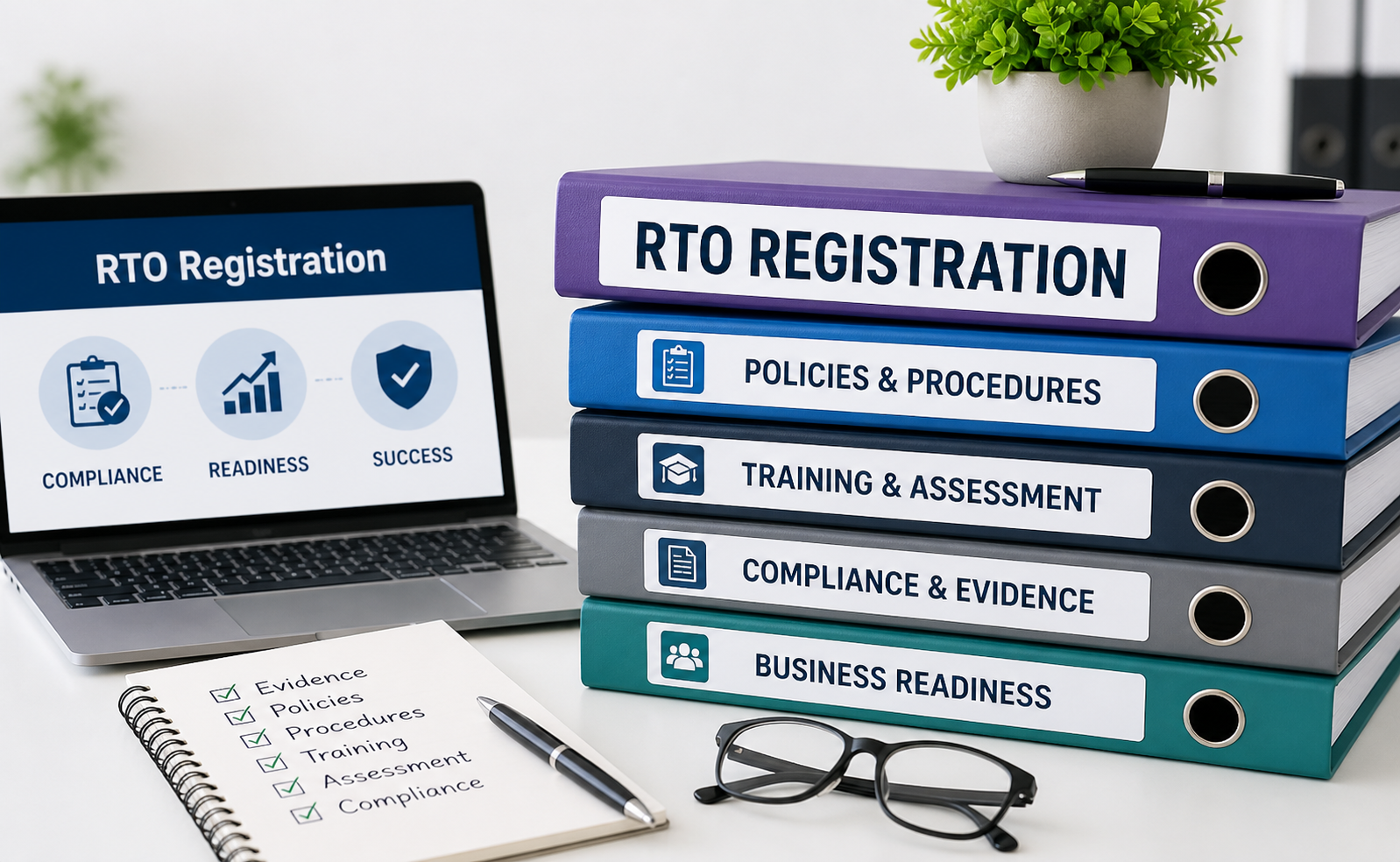
To become an RTO, you need to demonstrate that your organisation is ready. This includes your training and assessment strategies, assessment tools, trainer and assessor evidence, student support systems, policies, procedures, and business readiness.
The most common challenges are:
- understanding what evidence is actually required
- creating compliant training and assessment resources
- meeting trainer and assessor requirements
- organising policies and procedures properly
- preparing for regulatory scrutiny
- showing that systems are practical, not just theoretical
The reason why many applicants feel stuck halfway through the process. You might have documents, but they’re not the right ones; You might have some evidence, but not enough to satisfy the regulator.
Avoid Costly Mistakes and Delays
A failed RTO registration application can create major setbacks for a business.
It is not just the application fee that is at risk. A poor application can lead to:
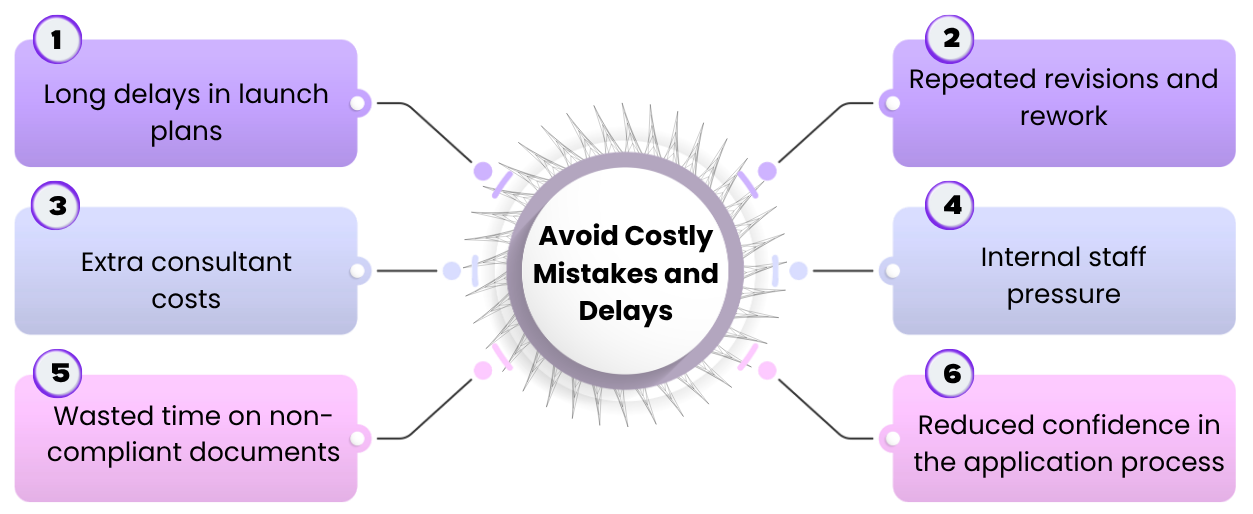
- Long delays in launch plans
- Repeated revisions and rework
- extra consultant costs
- internal staff pressure
- wasted time on non-compliant documents
- Reduced confidence in the application process
Many providers spend days and months preparing the documents, and at the end, they realise their system isn’t up to the standard.
That’s why you should treat your RTO registration application seriously from the start.
Just preparing your application properly will save you time, reduce stress, and elevate the chances of getting accepted.
Why Most Applications Get Rejected
There are several reasons an RTO registration application may fail. In most cases, it is not one major issue. It is a combination of smaller compliance gaps, weak evidence, and poor preparation.
Below are some of the most common reasons.
1. Incomplete or Inconsistent Documentation
Incomplete Documentation is the most common mistake RTOs make.
There should be a proper alignment and workflow in the policy and procedure, strategies, forms, and assessment tools.
If the submitted documents say different things, it creates doubt.
For example:
If your TAS describes a delivery model that does not match your staffing resources or student support. Your RTO registration application will be collapsed because of the kind of inconsistencies.


2. Generic Training and Assessment Strategies
Stop considering training and assessment strategies as templates; they can do much more.
While planning training and assessment strategy, you need to reflect on your learner cohort, delivery method, assessment pathway, industrial expectations, and available resources.
But what most applicants do is, they use the generic template without adapting to these real operations.
This makes the application look rushed and weak.
A strong RTO registration application should show that your organisation has genuinely planned how training and assessment will be delivered.
3. Weak Assessment Tools
Do you know that one of the most heavily reviewed parts of the registration is the assessment?
Your application may face serious issues if your tools are not properly written, do not match correctly or do not show clear benchmarking.
It is important for the assessment to support a valid, fair, flexible, and reliable assessment.
Many applicants don’t realise the importance of the assessment section. Even if you have the well-documented files for the rest of the sections, a weak assessment tool can bring serious damage to your application.


4. Trainer and Assessor Gaps
Trainer and assessor evidence is another common problem area.
A strong RTO registration application should clearly show that trainers and assessors have:
- the right qualifications
- current vocational competence
- relevant industry currency
- Ongoing professional development
- the ability to deliver and assess the selected training products
Missing resumes, incomplete evidence, outdated records, or weak industry currency files can raise major concerns.
5. Lack of Operational Readiness
Some organisations apply too early.
They may have drafted documents, but their systems are not fully established. Registration is not based on future intentions alone. You must show that your organisation is ready to operate properly.
This includes things like:
- student enrolment processes
- record management systems
- student support arrangements
- complaints and appeals procedures
- compliance monitoring systems
- staff responsibilities
If these systems look incomplete or unclear, the RTO registration application becomes much weaker.


6. Poor Understanding of Compliance Obligations
One of the biggest mistakes the applicants make is that they focus only on creating the documentation, but they forget that compliance is an ongoing task.
A successful RTO registration application must showcase something more than the paperwork. To maintain standards over time, the organisation must first understand what it means.
When your application doesn’t have the evidence of quality assurance, continuous improvement, risk management or compliance monitoring, it is easy for the regulators to decide whether the provider is ready or not.
7. Over-Reliance on Templates
It’s great to have the templates, but just that template isn’t enough.
A polished template doesn’t mean your application will be compliant. If you have copied the template without being customised, then your document will look generic, and it will disconnect from the real operation.
There are some cases where the documentation looks professional, but it still fails because it forgets to reflect your actual system.

How to Avoid These Mistakes
And don’t worry, with the right approach, most RTO registration application mistakes can be avoided.
Here are some practical ways to strengthen your application:
Understand the Registration Requirements Properly
Documentation is important, but don’t prepare any document until you understand the registration requirements.
Before starting, you must know what evidence is expected, what systems you need, and how you will prove readiness.
By doing this, you will reduce your chances of making an error later.
Build Documents Around Real Operations
Your documents should reflect how your organisation will actually work.
- Delivery model
- Learner cohort
- Trainer arrangements
- Assessment systems
- Student support processes
- Internal compliance responsibilities
A strong RTO registration application is built around real operations, not generic content.
Review Assessment Tools Carefully
Assessment tools should be one of your highest priorities.
- mapped to unit requirements
- easy for assessors and learners to understand
- supported by clear instructions
- benchmarked properly
- suitable for the context of delivery
This is a critical part of a compliant training provider registration process.
Organise Trainer and Assessor Evidence
Before submitting your RTO registration application, confirm that all trainer and assessor files are complete and up to date.
This should include qualifications, resumes, vocational evidence, industry currency, and professional development records.
Well-organised evidence helps show that your staffing model is compliant and ready.
Conduct an Internal Review Before Submission
A pre-submission review can make a major difference.
- missing evidence
- inconsistent wording
- unsupported claims
- gaps in systems
- generic documents that need customisation
A careful internal review helps you identify issues before they become bigger problems.
Get Expert Support if Needed
If the process feels overwhelming, seeking expert support can help reduce risk and improve the quality of your application.
VET Advisory Group helps you strengthen your evidence and identify weak spots in your application.
Seeking advice from experts helps you, especially if you are applying for the first time, managing multiple qualifications, or managing complicated delivery models.
FAQs
1. Why does an RTO registration application fail?
Most of the RTO registration applications fail because of incomplete documentation for assessment tools, trainer and assessor evidence, and inconsistent policies.
2. What is the most common mistake in an RTO registration application?
The most common mistake in an article registration application is relying on generic templates without adapting them to their real delivery models, systems, and compliance requirements.
3. Can poor assessment tools affect RTO registration?
Yes. Poor assessment tools are a major reason applications face problems. They must be mapped properly and show valid, fair, flexible, and reliable assessment practices.
4. How can I improve my RTO registration application?
To improve your RTO registration application, make your documents aligned with your real operation, check trainers’ and assessors’ evidence and fix any gaps before submitting.
5. Should I use an RTO consultant for registration support?
An RTO consultant can help if you need support with compliance, document review, internal audits, or application strategy. However, your organisation is still responsible for the final application.
6. How long does it take to prepare an RTO registration application?
Preparation time depends on your organisation’s readiness, the number of training products, and the quality of your existing systems. Applications often take longer when the evidence is incomplete or when documents need major revisions.
7. Can an incomplete RTO registration application cause delays?
Yes. Missing evidence, unclear systems, or inconsistent documentation can slow down the process and increase the risk of rejection.
8. What should I check before submitting an RTO registration application?
Before submission, check your policies, training and assessment strategies, assessment tools, trainer and assessor files, student support systems, and internal compliance processes.
Final Verdict
The most common reasons for a failed RTO registration application are poor preparation, weak compliance systems, and inconsistent documentation.
You can fix most of these problems by taking time to understand the requirements, building the documentation around the real operation, reviewing the assessment tools properly and organising your evidence before submitting it
The best application should be clear, practical, and supported by strong compliance thinking.
If you want an RTO registration application to be successful, but don’t have time to do the entire process because of your busy schedule.
You have a VET Advisory Group that focuses on quality, consistency, and operational readiness from the start. So that you can save your organisation time, money, and unnecessary delays.
About the author

Ben Thakkar
15+ yrs experienceCompliance, Training & Business Specialist · VET Advisory Group
Ben Thakkar is a Compliance, Training, and Business specialist in the education industry. He has held senior management roles, including General Manager, with leading Registered Training Organisations (RTOs) and Universities. With over 15 years of experience, Ben brings extensive expertise across audits, funding contracts, VET Student Loans, CRICOS, and the Standards for RTOs 2025.