

A Registered Training Organisation’s success depends on choosing the right RTO consultant in Australia.
Across Australia, only Registered Training Organisations (RTOs) can deliver nationally recognised Vocational Education and Training (VET). ASQA regulates over 4,000 RTOs, so owners juggle curriculum development, training delivery, and compliance with Standards for Registered Training Organisations.
Day-to-day operations are complicated when you’re managing these obligations.
You can improve training quality and meet regulatory requirements with help from an RTO consultant.
According to ASQA, external advice can help new providers with registration and compliance, and help established RTOs stay on top of quality.
A consultant helps RTOs navigate the changing landscape, but they’re still responsible for compliance. That’s why it’s important to pick a qualified consultant.
This blog will provide you with an overview of RTO consultants, a checklist of selection criteria, and a step-by-step guide to hiring one.
Why Australian RTOs Need a Qualified Consultant
Standards and regulations in the VET sector are constantly updated. Consultants stay up to date on ASQA requirements and industry best practices. They can:
- Create and evaluate the curriculum: Ensuring that the courses and assessments meet the needs of the industry.
- Makes internal audits easier: Finding and fixing compliance gaps will help you get ready for an ASQA audit.
- Supporting ASQA audits: Make your RTO appear professional (when re-registration, for example) by producing supporting documents, resolving issues, and presenting it with assurance.
- Continuous improvement in practice: By evaluating the data from your RTO and creating plans for quality enhancement.
- Control risks: Create strategies to reduce risks related to internal or external compliance.
- Support new RTO registration: Check that the application process runs successfully by collecting the required documentation and communicating with ASQA.
A consultant’s knowledge can help an RTO avoid non-compliance pitfalls and focus on quality training.

Key Selection Criteria (Checklist)
Here’s a checklist to help you compare RTO consultants. Look for consultants who prioritise ethics and transparency.
1. Qualifications & Experience
Search for relevant qualifications based on VET diplomas or certifications, such as
- TAE40116 Certificate IV in Training and Assessment,
- TAE50216 – Diploma of Training in Design and Development, or
- ISO accredited auditor qualifications.
You should verify the consultant’s experience with RTOs like yours (in terms of size, scope, and student cohort).
Check if they’ve worked with ASQA audits in your industry.
It’s great if they’ve been a trainer/assessor or audit manager, but they also need to be able to handle specific auditing or compliance tasks.


2. ASQA and Regulatory Knowledge
A RTO consultant must have:
- A strong understanding of RTO Standards (including any revised 2025 Standards).
- VET funding rules, and
- Data reporting.
It would be great if they had recent experience helping RTOs through ASQA audits. Check if they stay updated on ASQA bulletins and legislation changes.
3. Scope of Services
Make sure you know what services the RTO consultant offers.
Common services include:
- Audit preparation,
- RTO registration applications,
- course development,
- policies and procedures,
- trainer/assessor support, or
- compliance training for staff.
A lot of consultants also offer specialised services, like CRICOS registration or scope extensions.
Choose someone who fits your needs (like a consultant who can also design digital content for e-learning).


4. Pricing Models
Make sure you understand how they charge.
Some consultants bill hourly or daily, and others use fixed-price contracts or monthly retainers.
Australian RTO consultant usually charge $100-$250 an hour, depending on their expertise, while full registration projects might be quoted as lump sums.
Get a clear proposal – listing fees. Don’t let hidden costs sneak up on you.
You should have a written agreement outlining price, timeline, and deliverables, so make sure it’s detailed.
5. References and Case Studies
A reputable RTO consultant in Melbourne should have references you can check.
Ask for case studies or testimonials from RTOs who have had similar problems.
- Have they helped an RTO get registered or audited?
- Have their past clients seen any improvements?
If possible, talk to former clients.


6. Contract Terms and Written Agreement
Make sure you have a contract before you start.
You should have a contract that details the scope of work, deliverables, milestones, timeline, fees, and payment terms.
Besides confidentiality, it should cover intellectual property, termination conditions, and ownership of the materials.
Note:
The consultant (third party) must have a written agreement and notify ASQA within 30 days if they’re delivering training or assessment on your behalf.
7. Conflict of Interest
You want to make sure the consultant doesn’t have any conflicts.
For example: Try to avoid consultants who work for ASQA or have connections to competing RTOs.
Ask if they consult with your competitors or have other jobs that could influence their advice.
Your RTO’s best interest should be their top priority.
Consultants need to keep confidentiality and ethical standards.

8. Insurance and Professional Memberships
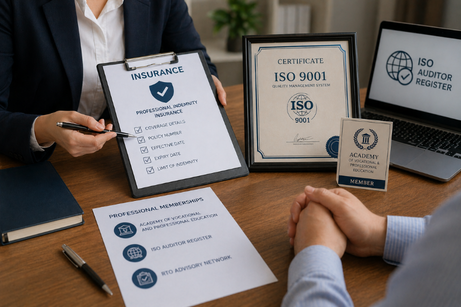
Don’t forget to check that the consultant is insured.
Ask about professional indemnity insurance if you’re worried about advice-related liabilities. (If they don’t have PI insurance, that’s a warning.)
Look for memberships and certifications.
The membership of professional associations (like the Academy of Vocational and Professional Education and ISO auditor registers) or certifications (like ISO 9001, a Quality Management System for Registered Training Organisations) show you’re committed.
9. Ongoing Support and Training Capability
Does the consultant provide support after the project?
There are some RTOs that benefit from ongoing retainers or scheduled check-ins.
Think about whether the consultant can help train your staff (like train-the-trainer sessions) and empower your team with compliance knowledge.


10. Digital and Technological Skills
As online delivery and learning management systems (LMS) become more popular, consultants who understand e-learning, digital assessment tools, and technology-enhanced training are valuable.
Get to know their experience with online course development, LMS platforms, or digital compliance.
11. Location and Availability
Do you need someone local, or can they work remotely?
Many RTO consultants in Melbourne offer nationwide services via phone/Zoom.
However, if you’d prefer face-to-face meetings, make sure they have a consultant near you. Alternatively, a local consultant might be easier to meet, but could be more expensive. Confirm their response time and availability so you know they’ll be there when you need them.
Each RTO’s needs and budget will vary, so use these criteria to rank prospective consultants and narrow your choices.

Step-by-Step Hiring Process of RTO Consultant
Define Your Needs
Identify why you need a consultant (e.g., ASQA audit prep, new RTO registration, policy overhaul). Be clear on the scope, timeline, and outcomes you want. Document these needs as “requirements” to be shared with candidates.
Search and Shortlist
Find potential consultants through RTO industry forums, professional networks, ASQA Stakeholder References, or directories. Ask other RTO owners for recommendations. Shortlist 3–5 consultants with relevant experience and a good reputation.
Review Credentials
Check out each consultant’s website, LinkedIn, and industry profiles. Verify their credentials, memberships, and experience. Make sure they mention RTO compliance and ASQA knowledge. Reject any with obvious red flags.
Initial Contact
Send a project brief to the people on your shortlist. Observe how quickly and professionally they respond. Slow or unfocused responses may show a lack of priority.
Interview Candidates
Arrange calls or appointments. Ask targeted questions. Gauge their communication abilities, grasp of your needs, and excitement. A good consultant will inquire about your RTO and provide clarification.
Check References and Portfolios
After interviews, request client references or case studies. Contact past clients, if possible, to confirm satisfaction. Also, ask to see sample policies, audit checklists, or other deliverables they have produced.
Evaluate Proposals
Invite each candidate to provide a detailed proposal: scope of work, deliverables, timeline, and cost. Compare them based on value and fit. Ensure key terms are in writing.
Negotiate Contract
Once you’ve decided on a consultant, negotiate the contract. Clarify what will be delivered, timelines, and payment milestones. Include confidentiality and compliance terms.
Onboard and Monitor
Welcome the consultant by briefing them on your RTO’s context. Set up regular check-ins. Monitor progress and maintain ongoing communication.
When you’re interviewing, ask questions like:
- Could you tell me about a recent ASQA audit you helped an RTO prepare for? What was the result?
- What do you do to stay on top of changes to the Standards for RTOs?
- What are your strategies for teaching an RTO’s staff compliance?
- How would you react if you found a major compliance gap in our RTO’s processes?
- How do you handle clients in the same sector without conflict?
You can tell a lot about someone by these questions
Frequently Asked Questions (FAQs)
1. What are the key ASQA requirements for trainers and assessors in RTOs?
ASQA requires trainers and assessors to hold relevant credentials, such as TAE40116 Certificate IV in Training and Assessment, and maintain current industry skills.
2. How do I verify that my trainers meet ASQA’s requirements?
You need to make sure trainees have the right qualifications, like TAE40116, have relevant industry experience, and participate in ongoing professional development.
3. What happens if my RTO’s trainers don’t meet ASQA requirements?
The RTO could face penalties, fail audits, or lose its registration if its trainer does not meet ASQA requirements.
4. Can a trainer without a TAE40116 Certificate still be eligible to assess?
Sure, but only under a trainer and assessor’s supervision. Without the TAE40116 Certification, they can’t make independent assessment judgments.
5. How often should RTO trainers engage in professional development?
Every year, trainers should keep up with industry practices, training g methods, and the latest developments.
6. What qualifications are required to become a trainer and assessor under ASQA?
The minimum qualification for a trainer and assessor is TAE400116. For delivering higher-level training, you need higher qualifications such as the Diploma of Vocational Education and Training (TAE50116) or the Diploma of Training Design and Development(TAE50216).
7. How do trainers maintain industry currency to meet ASQA requirements?
In order to maintain industry currency, trainers need exposure to workplaces, industry networking, and involvement in industry-related events.
8. What should RTOs do to prepare for ASQA audits?
To demonstrate compliance during audits, RTOs need to keep accurate records of trainer qualifications and documentation.
9. Can an RTO use unqualified industry experts for training purposes?
Yes, but unqualified experts need to be supervised. They can’t assess students or make judgments about them on their own. An RTO must ensure proper supervision and maintain training and assessment integrity.
10. How can RTOs prepare for the ASQA 2025 Standards changes?
Trainers need to update their skills to meet revised TAE standards, implement strategies for ongoing professional development, and work with industry stakeholders to keep their content relevant.
Conclusion
ASQA trainer and assessor meeting ASQA trainer and assessor requirements is an ongoing process for RTOs. It’s done by verifying qualifications, maintaining trainers’ currency, and their engagement with the industry partner. By doing these, you can ensure your RTO remains compliant and delivers high-quality training that meets the national standards.
About the author

Ben Thakkar
15+ yrs experienceCompliance, Training & Business Specialist · VET Advisory Group
Ben Thakkar is a Compliance, Training, and Business specialist in the education industry. He has held senior management roles, including General Manager, with leading Registered Training Organisations (RTOs) and Universities. With over 15 years of experience, Ben brings extensive expertise across audits, funding contracts, VET Student Loans, CRICOS, and the Standards for RTOs 2025.