

Introduction
RTO Management plays a central role in the performance, productivity, and compliance of Registered Training Organisations. Under the 2025 Standards for Registered Training Organisations, RTOs must ensure training and assessment are delivered by credentialed people with current skills and knowledge, and that staff capability is supported through ongoing professional development and systematic continuous improvement. Strong RTO Management helps leaders align staffing, training quality, and operational processes so trainers, assessors, and support teams can work efficiently while meeting regulatory expectations. In practice, this means building clear systems for workforce planning, competency mapping, feedback, and performance monitoring. When these systems are well managed, RTOs are better positioned to improve learner outcomes, reduce risk, and operate more productively. In this blog, we will discuss how RTO management improves RTO staff performance.
Why Staff Performance Matters
Staff performance and productivity directly affect the quality of training delivery, assessment integrity, learner support, and audit readiness. The 2025 Standards for RTOs require organisations to demonstrate that persons with the appropriate credentials deliver training and assessment and that their skills, knowledge, and industry relevance are maintained over time. That makes staff capability a compliance issue as well as an operational one. In other words, good RTO Management is about ensuring the right people are in the right roles, with the right support, evidence, and accountability structures. Productivity in an RTO includes timely assessment, accurate records, effective communication, reliable compliance evidence, and the ability to adapt to changing student and industry needs. RTOs that manage these areas well tend to have stronger staff morale, fewer operational bottlenecks, and better training outcomes.

Why it Matters in 2026
The scale of the market alone makes RTO Recruitment important.
NCVER reports that in 2024, 5.1 million students were enrolled in nationally recognised VET, up 1.8% on 2023, with VET reaching an estimated 26.6% of Australia’s resident population aged 15 to 64.
At the same time, Jobs and Skills Australia says VET teachers have been in shortage nationally and in every state and territory for the last two years, that nearly half of the workforce is aged over 50, and that around 3,800 more VET teachers are needed over five years, with projected employment growth of 21% by 2033.
Demand is also not evenly distributed. NCVER says the most popular training packages in 2024 were Community Services, Business Services, Tourism, Travel and Hospitality, Construction, Plumbing and Services, and Health.
In practice, that means many RTOs are competing for trainers and assessors in the very sectors where Australia already faces broader labour shortages.
7 Ways RTO Management Improves RTO Staff Performance and Productivity

Strategic Workforce Planning
RTO managers cannot improve what they have not mapped.
That’s why you have to start with a clear picture of your staffing demand. Know your delivery schedules, trainer availability, and currency requirements.
A workforce skills audit shows what you actually have. A gap analysis shows where the shortfalls are.
Do you have enough qualified trainers? Enough compliance staff?
Match staffing to enrolment demand and scope of delivery. When you do, trainers focus on the quality of delivery.
That directly improves RTO Staff performance and RTO productivity.
Practical tip: Build a workforce matrix showing each role, required credentials, current status, industry currency, and back-up coverage.
Professional Development and Currency
Professional development is addressed under the 2025 Standards, particularly Standards 3.1 and 3.2.
ASQA’s Trainer and Assessor Competencies Practice Guide is clear. Trainers must maintain current skills in training and assessment.
They must also stay current in their industry. Workshops, conferences, mentoring, and industry engagement all count.
Ad hoc PD doesn’t work for RTO Management. It needs to be planned, documented, and linked to competency gaps.
Records must show what was completed, when, and why. That makes professional development both a development tool and compliance evidenc
Practical tip: Keep a central PD register linking each activity to the trainer’s scope, competencies, and currency evidence.

Performance Appraisal and Feedback
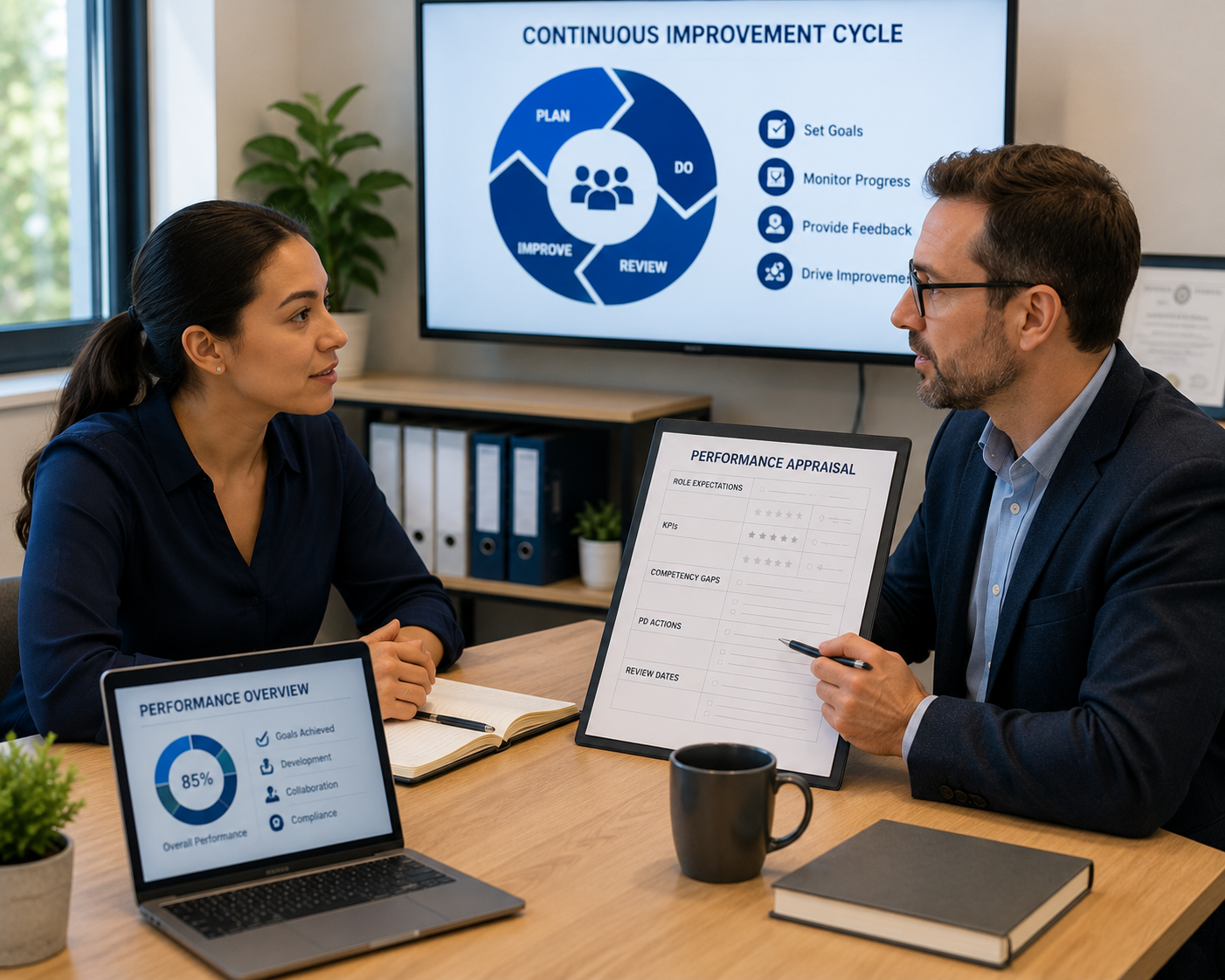
Annual reviews alone won’t build a high-performing team. They need to record what has already happened.
Combine formal appraisals with regular check-ins, especially for new staff and for compliance-sensitive roles.
The goal is an ongoing improvement cycle, not a yearly conversation.
Structured appraisals help managers identify strengths and address gaps.
They set measurable targets. They keep performance visible. In an RTO, that structure matters for compliance, too.
Practical tip: Use an appraisal template capturing role expectations, KPIs, competency gaps, PD actions, and review dates.
Clear Roles and Accountability
Good for punchy style, but make it slightly more professional: Confusion reduces productivity and increases compliance risk.
Staff perform better when expectations are crystal clear. They need to know what they’re responsible for. Who they report to. How success is measured.
The 2025 Standards make this a compliance matter, too. Where people work under direction, supervision must be documented. Assessment judgements can’t be made outside the approved scope.
Reporting lines, job descriptions, and delegation structures matter here. Strong RTO Management makes accountability visible at every level.

Continuous Improvement Systems
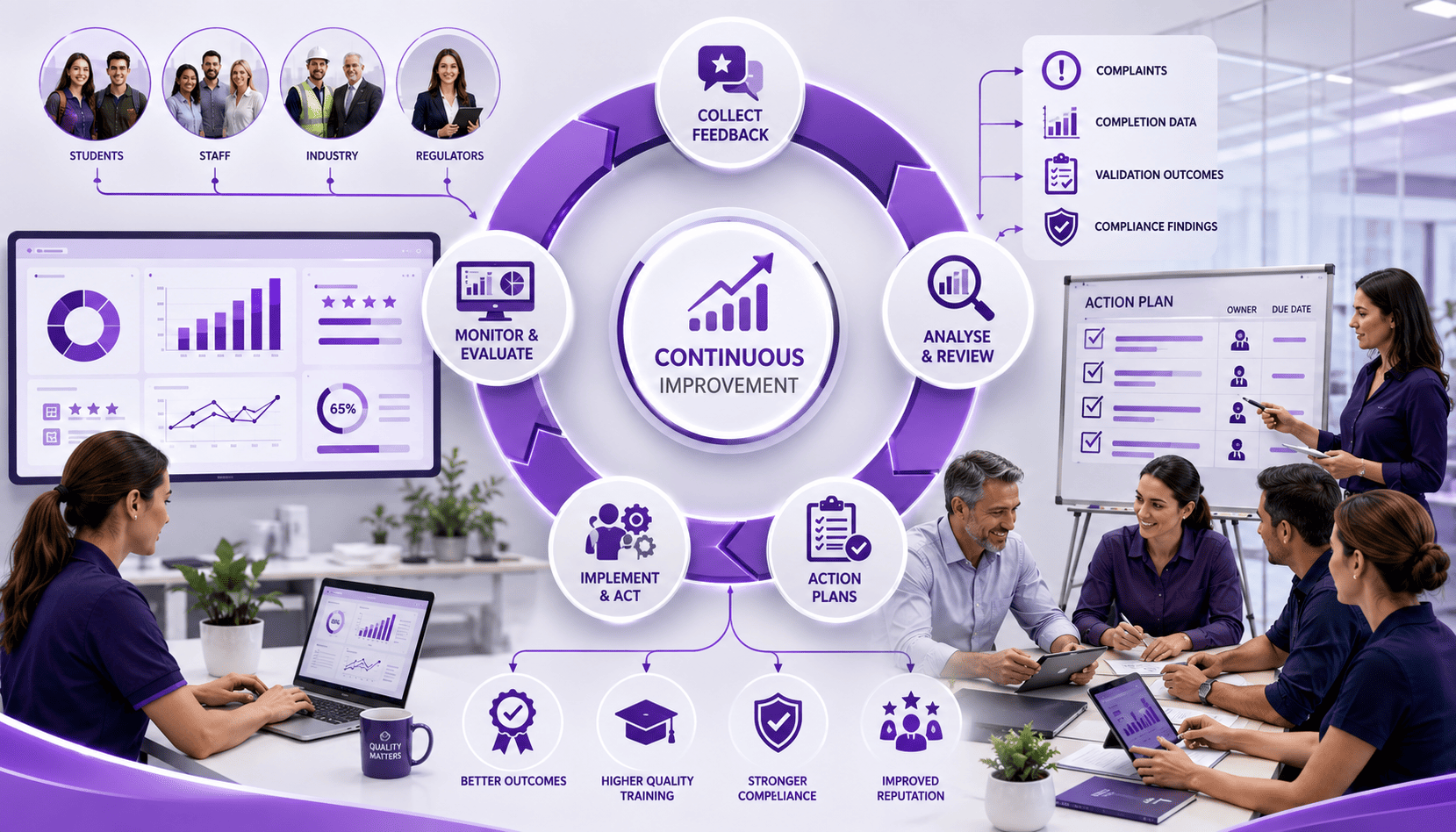
Continuous improvement can’t be informal. It must be systematic.
Under Standard 4.4, RTOs must monitor and evaluate their organisation. The 2025 Standards require a system for monitoring, evaluating, and using outcomes for continuous improvement, not a best-efforts approach.
Collect feedback from students, staff, industry, and regulators. Review complaints, completion data, validation outcomes, and compliance findings.
Then feed results into action plans with clear owners and deadlines. Don’t just collect data. Act on it.
Competency Mapping and Delivery
Competency mapping is one of the most practical tools available. It links each trainer to the units they’re approved to deliver.
Under Standards 3.2 and 3.3, this isn’t optional.
Delivery must be by credentialed people with current skills. Current in training and assessment. Current in their industry.
A competency matrix shows how credentials are verified.
It shows how currency is monitored, and staff are matched to delivery. It flags gaps before they become audit findings.
Good RTO Management uses a live matrix, not a static document.
Practical tip: Update the matrix after every Professional development activity, industry engagement, or scope change.

Compliance Evidence and Records
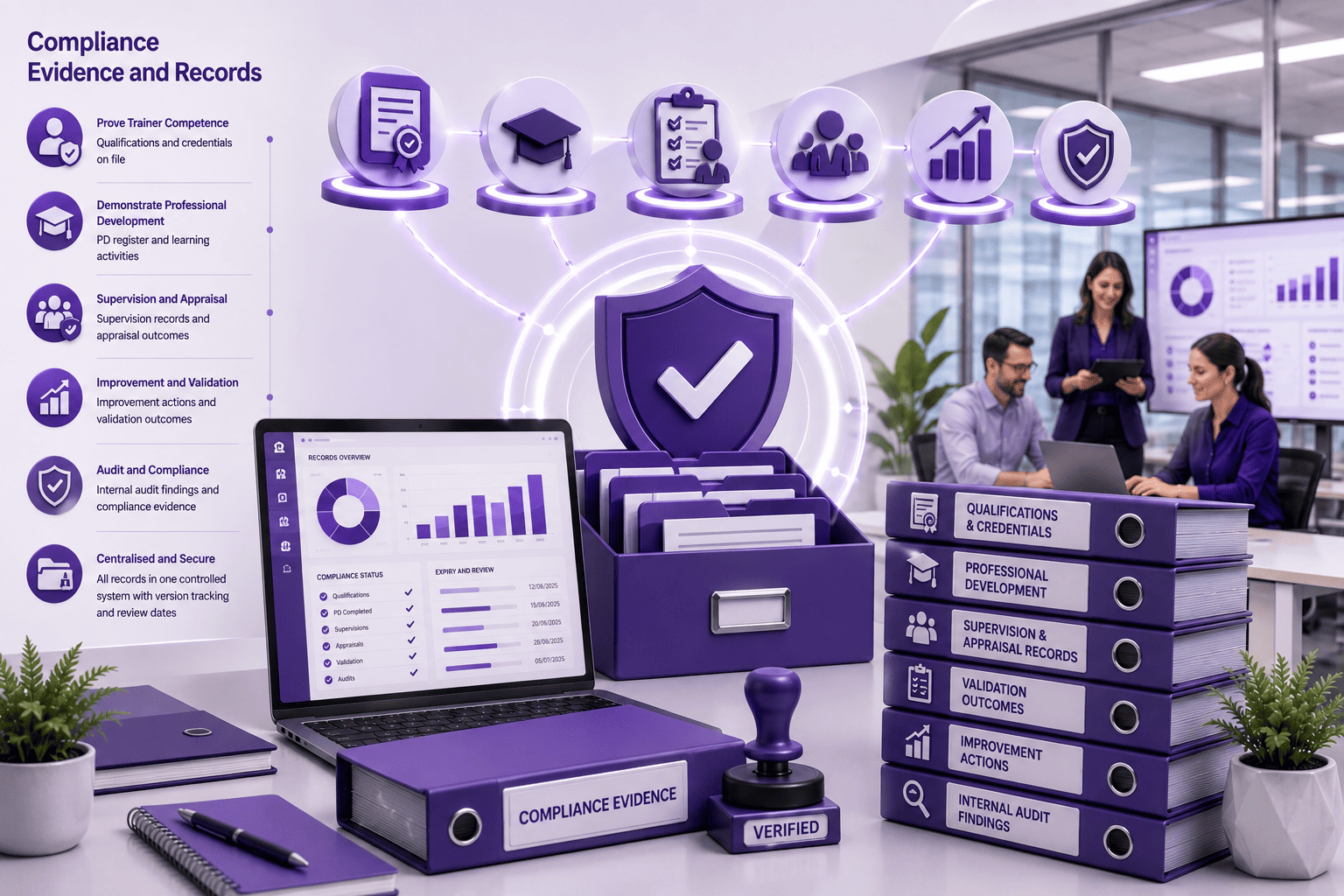
Good practice needs records and evidence.
Can you prove trainer competence? Show the evidence.
Can you demonstrate PD? Show the register.
Supervision records? Appraisal outcomes? Improvement actions?
If you can’t show it, ASQA won’t assume it happened.
Key records include qualifications, PD logs, appraisal records, and supervision notes.
Also, validation outcomes, continuous improvement registers, and internal audit findings.
These records aren’t just for audits. They help managers make better staffing and development decisions.
Practical tip: Store all evidence in one controlled system with version tracking and review dates.
How the VET Advisory Group Helps
VET Advisory Group supports RTOs with practical solutions. We cover workforce planning, competency mapping, PD frameworks, and appraisal templates.
Our tools are aligned to ASQA expectations and the 2025 Standards.
We help RTO leaders improve role clarity, recordkeeping, and accountability.
Need a performance framework? A compliance-ready PD system? We make implementation straightforward and audit-ready.
Get in touch with the VET Advisory Group today.
Let’s review your RTO management setup and identify what needs strengthening.
FAQs
What is RTO Management?
It’s the leadership, planning, and systems behind a functioning RTO. Staff performance, productivity, quality delivery, and compliance — all together.
How does RTO Management improve RTO staff performance?
It sets clear expectations. Supports development. Aligns roles to capability. And creates feedback systems that keep people improving.
Why is professional development important for RTO staff?
Because the 2025 Standards require it. Trainers must stay current in training, assessment, and their industry area. That’s not optional.
How often should performance appraisals happen in an RTO?
More often than once a year. Formal reviews work best with regular check-ins alongside them. Annual alone isn’t enough.
What role does continuous improvement play in productivity?
It finds what’s not working and fixes it. Fewer recurring issues. Better delivery. Staff focused on the right things.
Does RTO Management affect compliance?
Directly. Trainer competence, currency, performance monitoring, and continuous improvement are all central to the 2025 Standards. Weak management means compliance exposure.
What records should an RTO keep?
Qualifications, currency evidence, PD logs, appraisal records, validation outcomes, supervision notes, and improvement actions. All of them. Accessible and up to date.
How does role clarity improve productivity?
It removes duplication, confusion, and delays. Staff know what they own. No guessing. No gaps.
What is the first step to improving staff performance?
A workforce skills audit and gap analysis. Find the capability gaps first. Then build from there.
What is the best way to track staff capability?
A live competency matrix. Map each trainer to qualifications, currency, delivery scope, and PD evidence. Keep it updated. Always.
Conclusion
RTO Management is a practical driver of staff performance and productivity, not just a compliance requirement. Under the 2025 Standards for RTOs, organisations must ensure trainers and assessors are credentialled, maintain current skills and industry knowledge, and contribute to a system of continuous improvement. When workforce planning, PD, feedback, appraisal, and recordkeeping are managed well, RTOs can improve training quality, reduce risk, and create a more productive workplace. For leaders who want stronger outcomes, better systems, and clearer compliance evidence, disciplined RTO Management is the foundation for sustainable success.