Did you know that 32% of RTOs fail to meet at least one standard during ASQA audits? Don’t let your RTO be part of this statistic!
Registered Training Organisations (RTOs) in Australia go through a constantly changing landscape, with compliance at the forefront of these changes. We understand that compliance is not just a buzzword—it’s the lifeline of your business. With the Australian Skills Quality Authority (ASQA) continuously updating standards and conducting rigorous audits, staying audit-ready isn’t just about ticking boxes – it’s about ensuring your RTO’s survival and success in a competitive market.
To stay ahead of the game, developing audit-ready resources and implementing a strong, comprehensive RTO audit plan is essential. This plan should be a living document that guides your organisation through regular self-assessments, identifies potential compliance gaps, and outlines strategies for continuous improvement.
By integrating a well-structured RTO audit plan into your compliance strategy, you’re not just preparing for ASQA visits – you’re building a culture of quality and continuous improvement that will set your RTO apart. Let’s get into a comprehensive guide on developing audit-ready resources and mastering compliance before ASQA comes knocking.
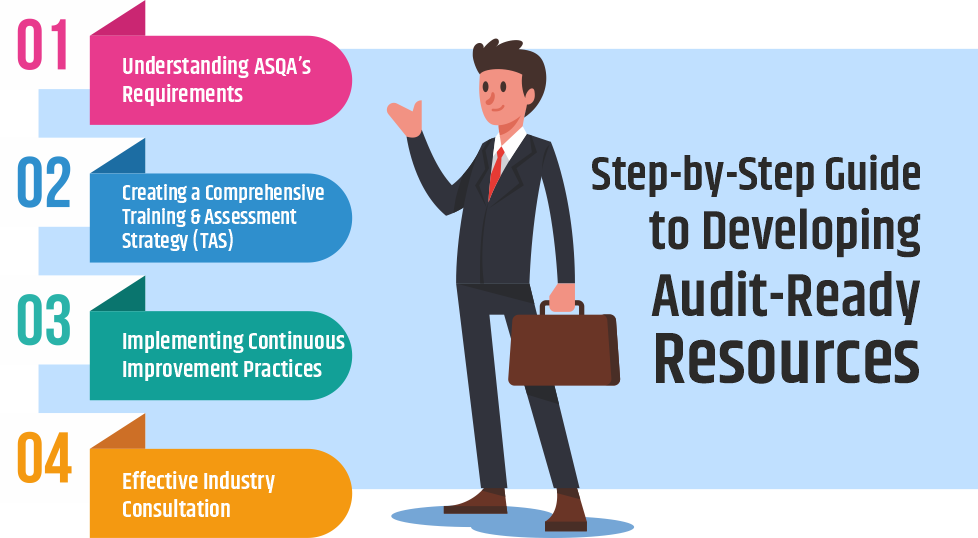
Step-by-Step Guide to Developing Audit-Ready Resources
1) Understanding ASQA’s Requirements
Key compliance areas ASQA focuses on include training and assessment strategies, trainer and assessor competency, and learner support services. Aligning with these standards is necessary as it not only ensures regulatory compliance but also enhances the quality of education you provide.
To stay updated with changing regulations:
- Regularly check ASQA’s website for updates
- Subscribe to ASQA’s newsletter
- Attend industry workshops and webinars
Recent changes in ASQA standards include increased emphasis on industry engagement and more stringent requirements for validation of assessment practices. These changes highlight the need for RTOs to be more proactive in their compliance efforts.
2) Creating a Comprehensive Training and Assessment Strategy (TAS)
A well-developed TAS is the backbone of your RTO’s compliance. Essential components include:
- Course structure and delivery methods
- Assessment strategies
- Trainer and assessor requirements
- Industry consultation evidence
To develop or update your TAS:
- Review current industry standards and ASQA requirements
- Consult with industry experts
- Map your training and assessment to the qualification requirements
- Document your strategies clearly and concisely
Here’s a sample TAS outline:
- Qualification Overview
- Target Learner Group
- Mode of Delivery
- Course Structure and Duration
- Assessment Methods
- Trainer and Assessor Requirements
- Industry Consultation
- Learning Resources
- Support Services
3) Implementing Continuous Improvement Practices
Continuous improvement in RTOs involves regularly reviewing and enhancing your training and assessment practices. This ongoing process is important for maintaining audit readiness and adapting to industry changes.
To manage and document improvements:
- Conduct regular internal audits
- Gather and analyse learner and industry feedback
- Implement a systematic review cycle for all courses
A simple continuous improvement cycle could look like this:
Plan → Implement → Review → Improve → Plan (repeat)
4) Effective Industry Consultation
ASQA requires RTOs to engage with industry to ensure training remains relevant and meets workforce needs. Effective consultation helps align your training with real-world industry requirements.
Strategies for meaningful industry engagement:
- Form industry advisory boards
- Attend industry conferences and events
- Conduct regular surveys with employers
Quick-Start Compliance Checklist:
Ready to take immediate action to improve your RTO’s audit readiness? Here’s a quick-start compliance checklist to get you on track:
- Review and update your Training and Assessment Strategies (TAS) for all qualifications.
- Conduct an internal audit of your assessment tools to ensure they meet the principles of assessment and rules of evidence.
- Update your trainer and assessor files, ensuring all qualifications and professional development activities are current.
- Review and enhance your learner support services, including your complaints and appeals processes.
- Implement a systematic feedback collection process from learners, staff, and industry partners.
To make this process even easier, we’ve created a comprehensive compliance self-assessment tool. This invaluable resource will help you identify potential compliance gaps and prioritise your improvement efforts. Don’t wait for an audit to catch you off guard – get a compliance self-assessment from VET Advisory Group today. It’s your first step towards building a strong, audit-ready RTO. Remember, proactive compliance management isn’t just about passing audits; it’s about delivering high-quality training that sets your RTO apart in the competitive VET sector.
How RTO C Transformed Their Compliance Approach
RTO C, facing compliance issues, implemented a comprehensive compliance management system. They:
- Appointed a dedicated compliance officer
- Conducted monthly internal audits
- Implemented regular staff training on compliance
- Developed a culture of continuous improvement
Result: RTO C passed their next ASQA audit with flying colours and saw improved learner satisfaction rates.
Conclusion
Remember, staying compliant isn’t just about passing audits – it’s about delivering quality training that prepares your learners for success in the Australian workforce. By implementing these strategies, you’re not only protecting your RTO but also contributing to the excellence of the VET sector.
Ready to bulletproof your RTO against audits? Book a free compliance health check with our experts today!
FAQs
How often does ASQA conduct audits?
ASQA conducts audits based on risk assessment, but typically every few years or when triggered by specific events.
What are the most common compliance issues for RTOs?
Common issues include inadequate assessment practices, insufficient trainer qualifications, and poor record-keeping.
How can I prepare my staff for an ASQA audit?
Conduct regular internal audits, provide compliance training, and ensure all staff understand their roles in maintaining compliance.