
The Standards for RTOs 2025 represent a significant evolution in the regulatory framework governing Registered Training Organisations (RTOs) in Australia. These updated standards aim to enhance the quality of vocational education and training (VET) while aligning with industry demands and the needs of students.
In this detailed blog, we’ll explore the RTO Standards 2025, their implications, and actionable steps to ensure compliance. Whether you’re an existing RTO or planning to enter the market, understanding these standards is crucial for success.
What Are the Standards for RTOs 2025?
The Standards for RTOs 2025 are the revised set of guidelines established by the Australian Skills Quality Authority (ASQA). These standards define the requirements that RTOs must meet to deliver nationally recognised training and assessment. They build on the previous Standards for RTOs 2015 but introduce new measures to address emerging challenges in the VET sector.
Key Objectives of the RTO Standards 2025
- Improving Training Quality: Ensuring that RTOs deliver training that meets industry and student needs.
- Enhancing Student Outcomes: Focusing on employability, skill relevance, and practical readiness.
- Strengthening Regulatory Compliance: Simplifying and streamlining compliance requirements while maintaining accountability.

Key Changes in the RTO Standards 2025
The transition from the Standards for RTOs 2015 to the Standards for RTOs 2025 introduces several notable changes. Here are the key updates:
1. Emphasis on Industry Engagement
The Standards for RTOs 2025 place a stronger emphasis on industry consultation. RTOs must demonstrate:
- Active engagement with industry stakeholders to validate training and assessment strategies.
- Alignment of course content with current industry standards and practices.
- Regular updates to ensure relevance to workplace needs.
2. Enhanced Trainer and Assessor Requirements
Trainer and assessor qualifications have been updated to ensure greater competency:
- All trainers must hold the updated TAE40122 Certificate IV in Training and Assessment or equivalent.
- Ongoing professional development is mandatory, focusing on industry currency and teaching effectiveness.
3. Strengthened Student Support
RTOs are required to:
- Provide tailored support for students, particularly those from disadvantaged backgrounds.
- Offer clear guidance on training pathways, assessment requirements, and job outcomes.
- Use data to track student progress and outcomes, ensuring timely interventions where necessary.
4. Streamlined Compliance Processes
The RTO Standards 2025 aim to reduce administrative burdens by:
- Simplifying reporting requirements for RTOs.
- Introducing digital tools to streamline compliance audits.
- Encouraging self-assessment and continuous improvement practices.
5. Integration of Technology
Technology has become a key focus in the updated standards:
- RTOs must integrate modern tools into training delivery, such as e-learning platforms and simulation technologies.
- Training and assessment materials should leverage digital advancements to enhance learning outcomes.
Compliance Requirements Under the RTO Standards 2025
To comply with the Standards for RTOs 2025, RTOs must address several critical areas:
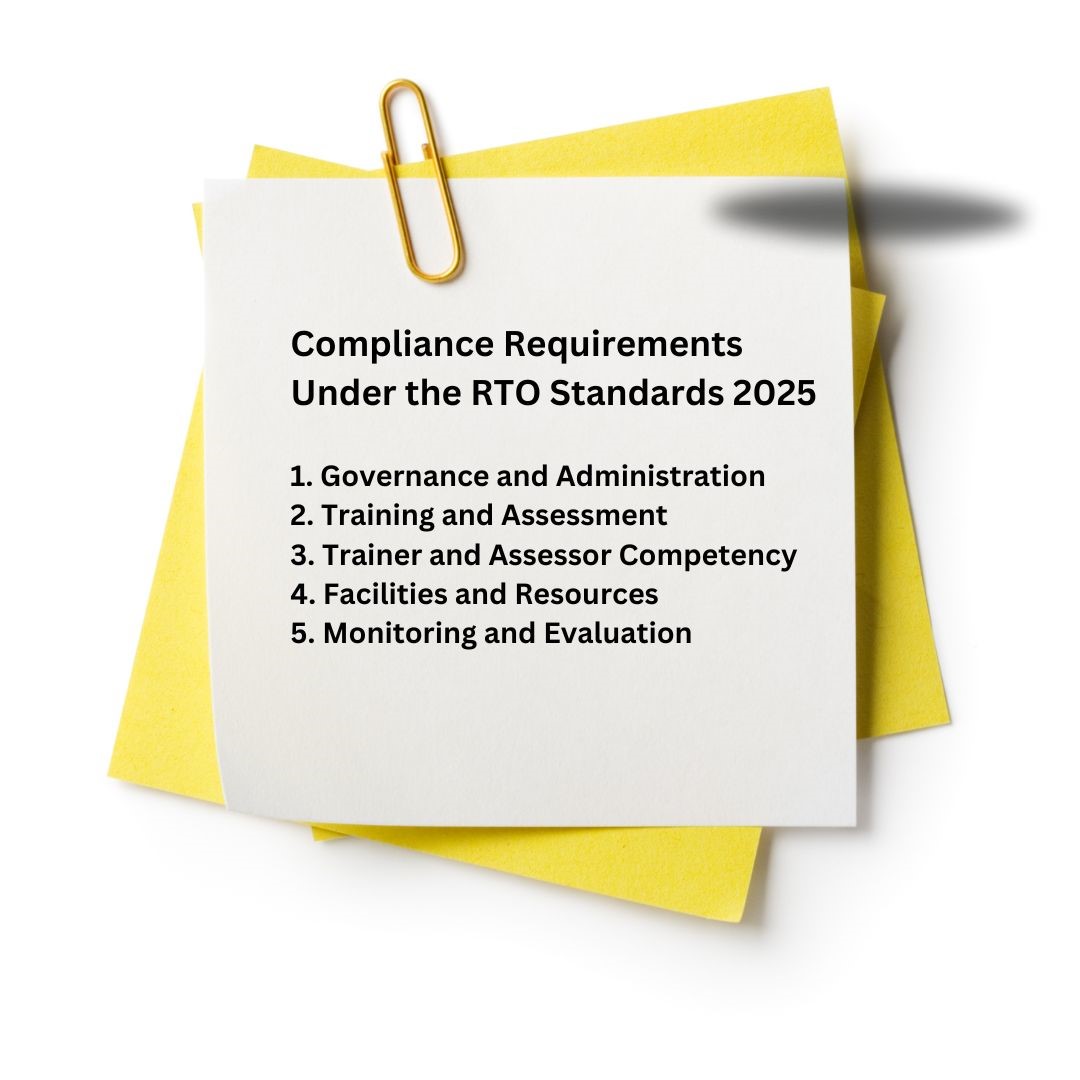
1. Governance and Administration
- Establish robust governance frameworks to oversee operations.
- Ensure financial viability and the ability to sustain quality training.
- Maintain up-to-date policies and procedures aligned with the 2025 standards.
2. Training and Assessment
- Align training and assessment strategies (TAS) with updated training packages.
- Incorporate practical, real-world scenarios into assessments.
- Use validated assessment tools to ensure consistency and reliability.
3. Trainer and Assessor Competency
- Document and maintain records of trainer qualifications and professional development.
- Conduct regular performance reviews to ensure teaching quality.
4. Facilities and Resources
- Provide facilities and resources that meet or exceed industry standards.
- Ensure accessibility for all students, including those with disabilities.
5. Monitoring and Evaluation
- Implement systems to collect and analyse feedback from students, employers, and trainers.
- Use data insights to drive continuous improvement.
Actionable Steps for RTOs to Transition to the 2025 Standards
Transitioning to the RTO Standards 2025 requires careful planning and execution. Below are actionable steps to help your organisation stay compliant:
Step 1: Review and Update Policies
- Audit existing policies and procedures to ensure alignment with the new standards.
- Update governance documents to reflect changes in compliance requirements.
Step 2: Engage with Industry
- Establish partnerships with key industry stakeholders.
- Validate your training and assessment materials through regular consultation.
Step 3: Upskill Trainers and Assessors
- Ensure all trainers and assessors meet the updated qualifications.
- Invest in professional development programs to maintain industry currency.
Step 4: Leverage Technology
- Integrate e-learning platforms and other technologies into your delivery methods.
- Use digital tools for assessment and compliance reporting.
Step 5: Strengthen Student Support
- Develop comprehensive student support frameworks.
- Implement feedback mechanisms to monitor and enhance the student experience.
Benefits of Complying with the RTO Standards 2025
Complying with the Standards for RTOs 2025 offers several advantages for your organisation:
1. Improved Reputation
RTOs that consistently meet the updated standards will gain a reputation for quality and reliability, attracting more students and industry partnerships.
2. Enhanced Student Outcomes
A focus on quality training and industry relevance ensures students are better prepared for employment, boosting your RTO’s success metrics.
3. Streamlined Operations
Simplified compliance requirements reduce administrative overhead, allowing you to focus on delivering exceptional training.
4. Regulatory Security
Maintaining compliance minimises the risk of penalties or suspension, ensuring long-term operational stability.
Challenges in Adapting to the RTO Standards 2025
While the Standards for RTOs 2025 present opportunities, they also pose challenges:
1. Cost of Transition
Updating training materials, facilities, and staff qualifications can be expensive.
Solution: Develop a phased transition plan to spread costs over time.
2. Keeping Up with Technological Changes
The rapid pace of technological advancements can be overwhelming.
Solution: Partner with tech providers who specialise in VET solutions.
3. Managing Industry Expectations
Increased industry consultation can be time-consuming.
Solution: Establish regular communication channels with key stakeholders.
Key Takeaways: Preparing for the Future with the RTO Standards 2025
The Standards for RTOs 2025 represent a forward-thinking approach to vocational education and training in Australia. They aim to enhance training quality, improve student outcomes, and simplify compliance processes. By proactively adapting to these changes, RTOs can position themselves for long-term success.
Summary of Key Points
- The Standards for RTOs 2025 introduce significant updates, including stronger industry engagement, enhanced trainer requirements, and a focus on technology.
- Compliance involves updating policies, training strategies, and facilities to meet new benchmarks.
- Challenges such as cost and complexity can be mitigated with careful planning and expert support.
By understanding and implementing the RTO Standards 2025, your organisation can thrive in a competitive and evolving VET landscape.