


As the VET sector moves into 2025, Australian Registered Training Organisations (RTOs) face a wave of new compliance expectations. With ASQA’s evolving approach to regulation and the implementation of updated VET Standards Compliance requirements, it’s never been more critical for RTOs to stay proactive.
“ASQA currently oversees more than 4,000 RTOs delivering nationally recognised qualifications across Australia — each one responsible for maintaining quality, transparency, and compliance.”
The 2025 reforms signal a shift toward evidence-based auditing, digital integration, and learner-centric quality measures. This guide breaks down what RTOs need to know, how to stay ahead, and what RTO Audit Readiness looks like in the year ahead.
Why RTO Compliance Matters More Than Ever in 2025
The new compliance era is built around accountability, learner experience, and transparency. RTO Compliance 2025 is not just about passing audits — it’s about embedding quality assurance into every aspect of training and assessment delivery.
The importance of compliance includes:
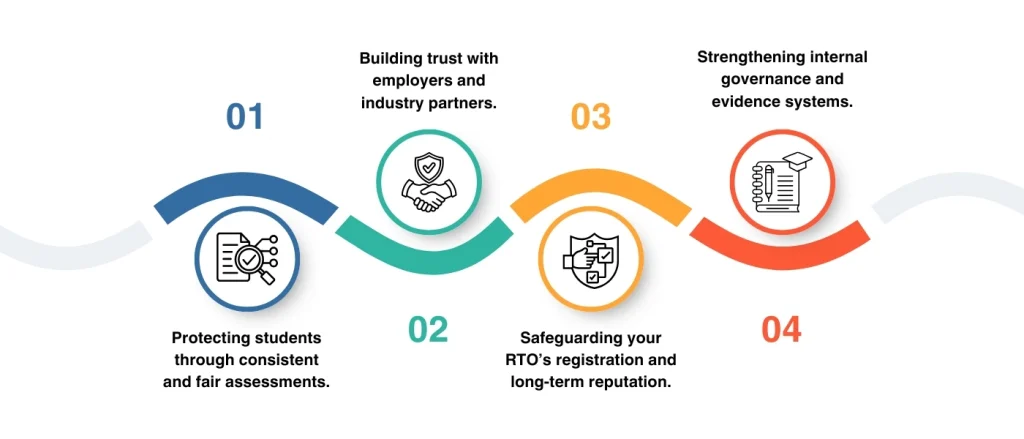
RTOs that treat compliance as a continuous improvement process — not a one-off checklist — will lead the way in 2025.
Key VET Standards Compliance Updates for 2025
The VET Standards Compliance framework is being updated to address modern delivery models and global workforce demands. Below are the areas RTOs should prioritise:
1. Assessment Reform
- Evidence must clearly demonstrate competency across knowledge, skills, and
- Authentic workplace tasks and simulations are critical to validity.
- Assessment tools must be mapped precisely to unit requirements.


2. Trainer and Assessor Requirements
- Trainers must maintain current industry skills and qualifications.
- RTOs are expected to record evidence of ongoing professional development (CPD).
3. Learner Support & Equity
- Clear systems for language, literacy, numeracy, and digital (LLND) support.
- Demonstrated fairness and access for diverse learner groups.


4. Governance and Leadership
- Senior management accountability for quality assurance.
- Evidence of continuous improvement and responsive risk management.
Preparing for ASQA Audit Compliance
ASQA’s audits will now focus heavily on outcomes, not intentions. Evidence of learner progress, completion, and feedback will hold more weight than policies alone.
Strategies to Strengthen RTO Audit Readiness
Building RTO Audit Readiness requires embedding compliance culture organisation-wide:
- Compliance Ownership: Every staff member should understand how their role supports compliance.
- Continuous Improvement: Regularly analyse feedback, identify improvement actions, and document results.
- Professional Development: Keep all trainers’ and assessors’ CPD logs updated and easily accessible.
- Technology Integration: Adopt compliance management software to automate tracking.
- Mock Audits: Simulate ASQA audits annually to maintain team confidence and evidence accuracy.

Staying Ahead of VET Sector Regulatory Updates
To stay informed:
Being proactive ensures your RTO isn’t reacting to changes after they’ve already impacted your operations.
FAQs
What is the ASQA Corporate Plan 2025–26 and why is it important for RTOs?
How will these changes affect VET providers?
What steps should my RTO take to remain compliant?
Can I access free samples of LLND, RPL, or Learning & Assessment Kits?
Does VET Resources provide resources aligned with the new ASQA requirements?
Your path to RTO Compliance 2025 starts here — with audit-ready tools, expert guidance, and fully aligned VET resources designed for the evolving ASQA landscape.


