

A big part of training and assessment is planning said training and assessment. Many RTOs even with the best training materials and best trainers may find themselves struggling if they don’t plan – especially their training sessions.
A well-planned training session plan is essential for the best interests of students. A well-planned session plan will lead to better and clearer learning outcomes which lead to higher performance in assessments.
But if you are not sure if your current session plan for a certificate II is best suited for your students then read this blog.
We will discuss:
- Training session plan for a knowledge training session.
- Training session plan for a work-based training session.
Training sessions hold a crucial purpose within Registered Training Organisations (RTOs). They are the primary vehicle for delivering knowledge, skills, and competencies for learners to achieve nationally recognised qualifications. Asking questions like:
- Are your learners engaged and motivated throughout a training session?
- Are your training methods effective in engaging learners, promoting active participation, and ensuring knowledge retention?
- Do your training sessions adhere to all relevant AQF qualification and regulatory requirements?
- What do you do to ensure your training content aligns with current industry trends, qualification requirements, and learner needs?
The questions like above will help you analyse your current training sessions and session plans. As the blog title suggests we will be focusing on the session plans for Certificate II specifically.
What is Certificate II AQF Qualifications in Australia?
Certificate II courses are designed for people who want to either further study or take routine work.
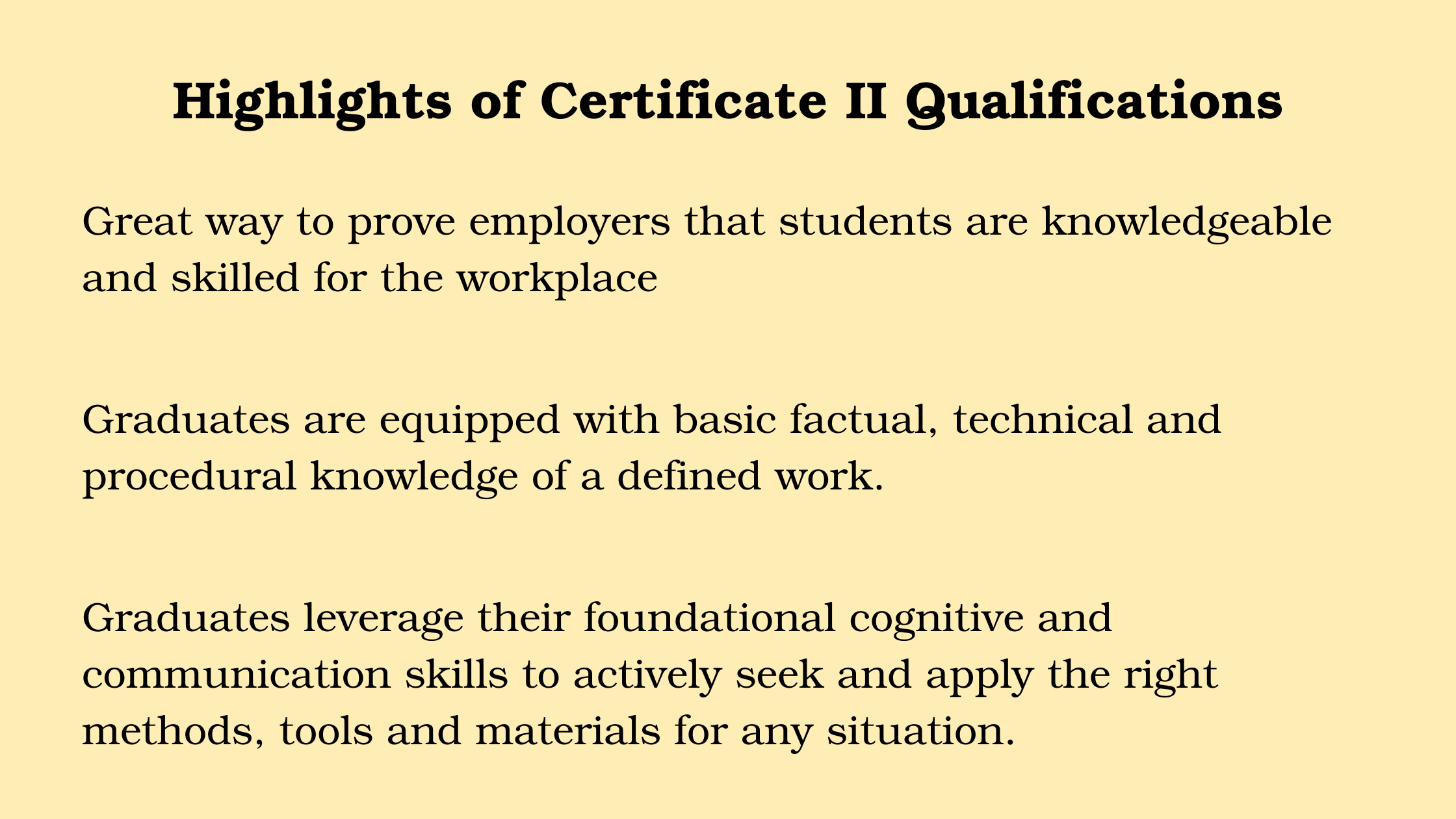
Certificate II is quite popular among vocational students for the same reasons. So, if you are an RTO delivering certificate II you have to be mindful of training and assessments you take. The session plans lay the groundwork for this task.
What is a Session Plan?
A session plan is for trainers, outlining the structure and activities for a single training session within a larger vocational training program. It helps ensure efficient and effective delivery of the planned learning outcomes, catering to the specific needs of the training package and target student group.
Training sessions hold a crucial purpose within Registered Training Organisations (RTOs). They are the primary vehicle for delivering knowledge, skills, and competencies for learners to achieve nationally recognised qualifications.
Session plans are made for both knowledge training and task-based training. Before we discuss how to prepare session plans for both kinds of training let’s see what each session plan should contain whether it is knowledge training and task-based training.
What information must be included in each of my session plans?
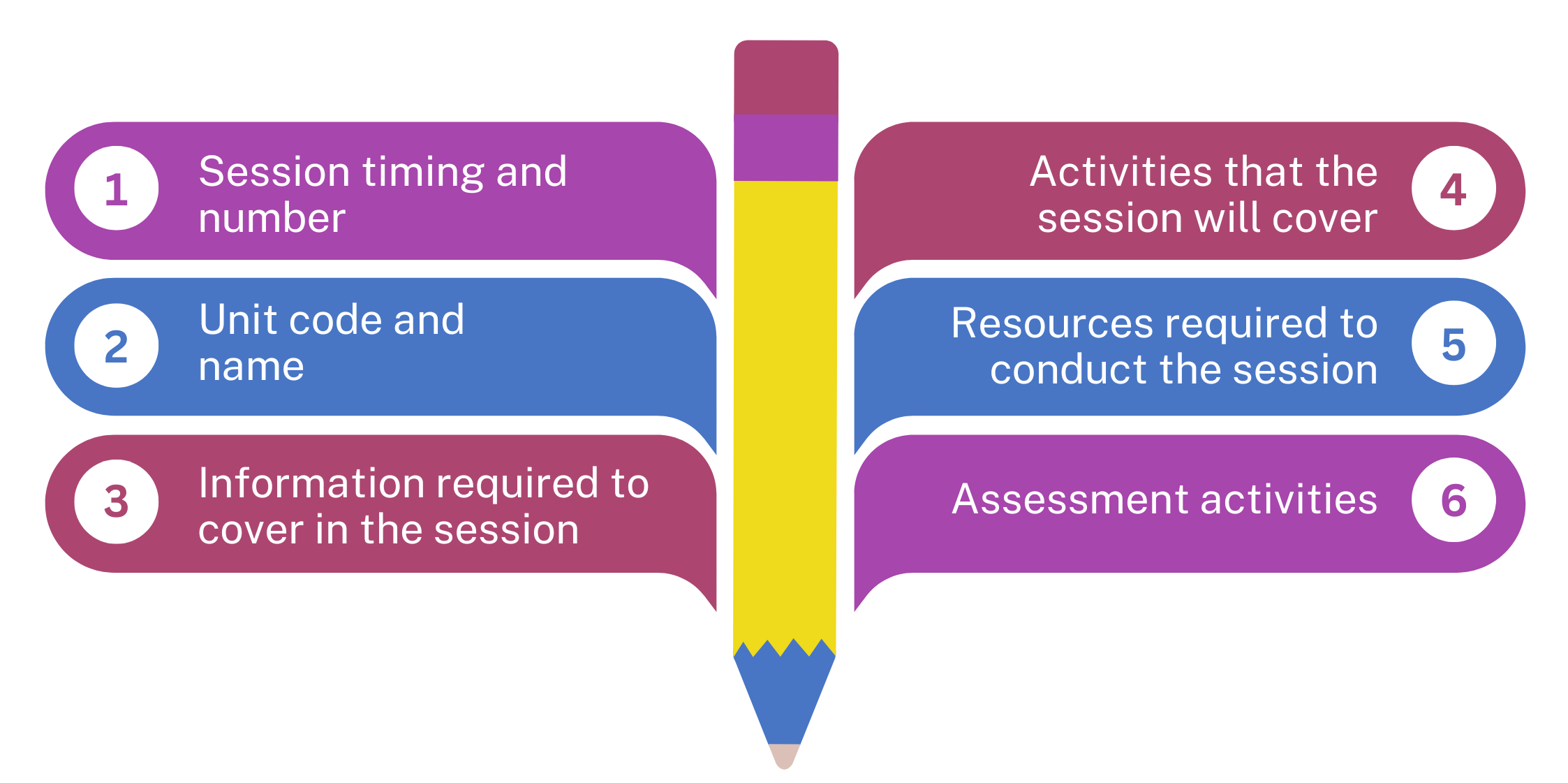
- Session timing and number
- Unit code and name
- Information required to cover in the session
- Activities that the session will cover
- Resources required to conduct the session
- Assessment activities
Let’s now look at how session plan for a knowledge training session of a Certificate II course.
Session Plan for a Knowledge Training Session for a Certificate II Course
According to the definition of session plan above the session plan for certificate II will have everything a trainer will deliver and need to deliver a session. An example will help:
BSBPEF202 is a unit of competency which teaches how to plan and apply time management in the BSB training package.
Out of three elements that an RTO needs to train its students for one is – Review work performance. We will look how to draft a session plan for that.
|
Session Plan for a Work Based Training Session for a Certificate II Course
In the community services training package, there is a unit of competency called HLTWHS001 – Participate in workplace health and safety.
The unit’s element – Implement safe work practices – requires work based training. Let’s see how the session plan draft might look for it.
|
You can use these two session plan drafts to start planning an effective session plan as your requirement.
In cases where you and your training staff are not confident in developing session plans, you can always purchase them from a trusted resource provider. We have provided a detailed list of Certificate II courses where we offer session plans along with other resources. These are developed by subject matter experts and are easy to contextualise.
List of Certificate II courses
| No. | Code of the Certificate II | Name of the Certificate II |
| 1 | BSB20120 | Certificate II in Workplace Skills |
| 2 | FNS20120 | Certificate II in Financial Services |
| 3 | UEP20222 | Certificate II in Remote Area Essential Service |
| 4 | UEP20122 | Certificate II in ESI Generation – Operations Support |
| 5 | UEE22020 | Certificate II in Electrotechnology (Career Start) |
| 6 | SHB20216 | Certificate II in Salon Assistant |
| 7 | SHB20121 | Certificate II in Retail Cosmetics |
| 8 | AUR20220 | Certificate II in Automotive Air Conditioning Technology |
| 9 | 22485VIC | Certificate II In EAL (Access) |
| 10 | 22488VIC | Certificate II In EAL (Employment) |
| 11 | ICT20120 | Certificate II in Applied Digital Technologies |
| 12 | ICT20115 | Certificate II in Information, Digital Media and Technology |
| 13 | RII20715 | Certificate II in Civil Construction |
Conclusion
Certificate II is famous among students and hence you as an RTO should definitely maintain the delivery quality. One way to do it craft good session plans. Use this blog to understand how it can be done properly.
Want guidance and assistance in crafting training session plan for Certificate II?
Then VET Advisory Group is the partner you need. We offer consultation and assistance in all areas of RTO setup, audits and operations. If you would like free samples and consultation, contact us here.
Frequently Asked Questions
How can I make sure my session plan aligns with specific Certificate II requirements?
To perfectly align your session plan with Certificate II requirements, consult the training package guidelines for specific learning outcomes, assessment criteria, and resource recommendations. Map your plan directly to these elements, ensuring activities and assessments target the required skills and knowledge.
Do I need to adapt my plan for different learner groups?
Adapting your plan for different learner groups is crucial. Consider prior knowledge, learning styles, and diverse needs. Offer differentiated instruction through varied activities, resources, and pacing to maximise learning for all participants.
Can I use the same basic plan for different training topics within the Certificate II program?
While a basic plan can offer a foundational structure, significant variation across topics within a Certificate II program is often necessary. Tailor content, activities, and resources to address the specific learning objectives and skill sets required for each individual topic.
How can I balance theoretical concepts with practical application in my session plan?
Balance theoretical concepts with practical application by weaving real-world scenarios, case studies, and simulations into your session plan. Encourage hands-on activities, role-playing, and demonstrations to solidify theoretical understanding and develop practical skills.
What kind of interactive activities can I incorporate to keep participants engaged throughout the session?
Incorporate a variety of interactive activities to keep participants engaged throughout the session. Utilise group discussions, brainstorming sessions, problem-solving challenges, and collaborative projects to promote active learning and knowledge sharing.
Does the session plan leave room for adjustments based on participant needs and feedback during the session?
Embrace session plan flexibility by leaving room for adjustments based on participant needs and feedback. Be prepared to modify activities, clarify concepts, or address emerging questions during the session to ensure every learner is successfully progressing towards the learning goals.