
Introduction
Registered Training Organisations (RTOs) play a crucial role in vocational education, shaping the futures of numerous individuals in Australia. These institutions rely heavily on top-notch RTO training resources and learning materials to provide comprehensive and effective training. The availability of training resources for sale has made it easier for RTOs to access high-quality materials, ensuring that learners receive the best possible education. As we delve into this guide, we will explore the vast array of RTO training materials and learning resources, helping you make informed decisions to enhance your educational programs.
Choosing the right resources is paramount, and this is where compliant learning resources and RTO assessment tools come into play. They ensure that your training programs meet the current industry standards and provide learners with the necessary skills. Whether you are looking to purchase RTO training resources, seeking CHC training resources, or need ICT training resources, this article aims to guide you through the process, offering valuable insights and practical advice. Our goal is to empower your RTO with the tools it needs to succeed, fostering an effective and inspiring learning environment.
Understanding Training Resources for RTOs
Defining RTO Training Resources:
- RTO Training Materials: These comprehensive guides and documents are used to deliver courses and programs.
- RTO Learning Resources: These include various tools such as textbooks, online content, and interactive modules.
- Assessment Tools: These are used to evaluate the learners’ understanding and application of the course material.
The Role of Training Resources in RTOs:
- Facilitating Learning: They provide a structured learning pathway for students.
- Ensuring Compliance: Resources help in adhering to national standards and industry requirements.
- Enhancing Engagement: Interactive and well-designed materials keep learners engaged.
Types of Training Resources Available for RTOs:
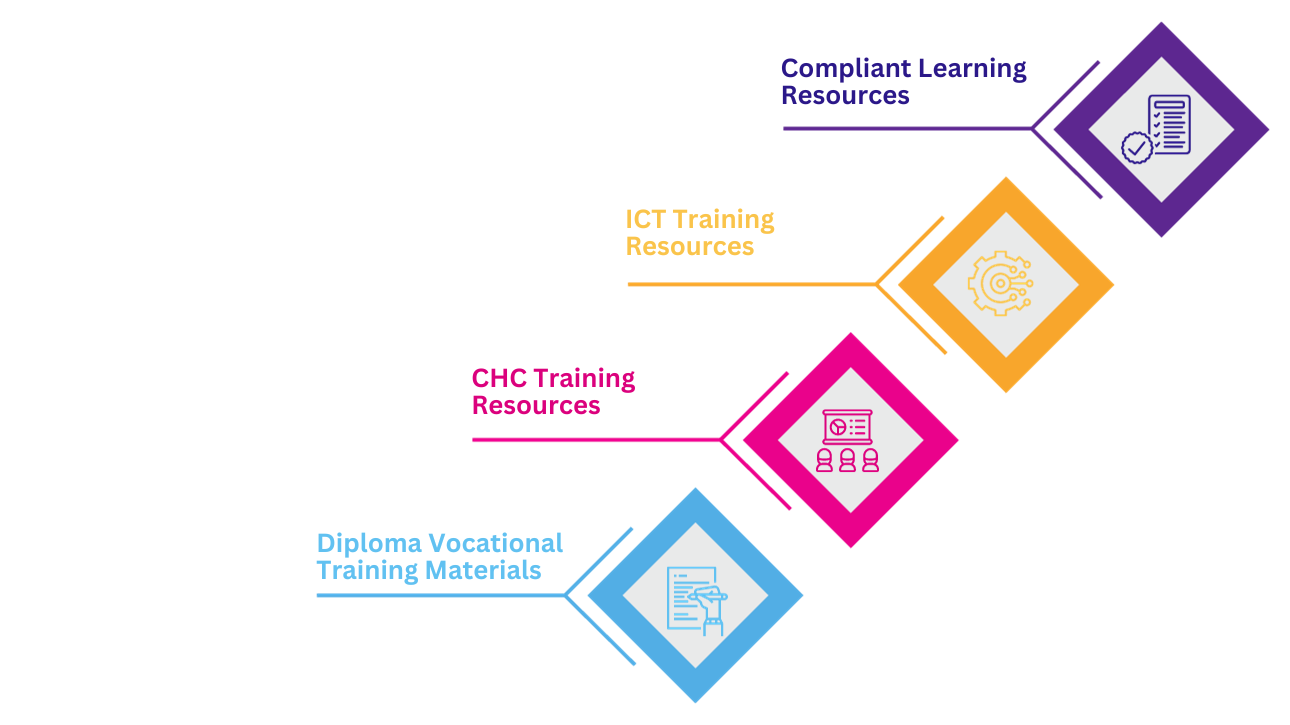
- Compliant Learning Resources: These meet the Australian Qualifications Framework (AQF) and other regulatory requirements.
- ICT Training Resources: Specialised materials for Information and Communication Technology courses.
- CHC Training Resources: Resources tailored for Community Services and Health courses.
- Diploma Vocational Training Materials: Advanced resources for diploma-level vocational training.
Criteria for Selecting the Best Training Resources
Key Considerations for RTOs:
- Alignment with AQF: Ensure resources align with the Australian Qualifications Framework.
- Industry Compliance: Resources must meet current industry standards and regulations.
- Adaptability: Choose materials that can be easily updated and adapted to changing needs.
- User-Friendliness: Ensure educators and learners can easily navigate and use the resources.
- Support and Updates: Opt for providers offering ongoing support and regularly updating their materials.
Table: Checklist for Selecting Training Resources
| Criteria | Description | Importance |
| Alignment with AQF | Resources should align with national educational standards. | High |
| Compliance with Standards | Materials must adhere to industry-specific regulations and standards. | High |
| Adaptability and Flexibility | Resources should be easily adaptable to suit different learning needs. | Medium |
| User-Friendliness | Materials should be straightforward and easy to use for all parties. | High |
| Ongoing Support | Choose providers that offer continuous support and regular resource updates. | High |
How to Purchase and Implement Training Resources
Purchasing Training Resources:
- Research Providers: Explore various providers, such as VET Resources and Compliant Learning Resources.
- Evaluate Materials: Ensure the resources align with the Australian Qualifications Framework and meet current industry standards.
- Consider Support and Updates: Opt for providers that offer ongoing support and free lifetime updates.

Implementing Training Resources:
- Train Your Staff: Ensure that educators are familiar with the new resources and know how to use them effectively.
- Integrate into Curriculum: Seamlessly incorporate the new materials into your training programs.
- Gather Feedback: Regularly collect feedback from educators and learners to identify areas for improvement.
Table: Steps for Purchasing and Implementing Resources
| Step | Description | Tips |
| Research and Evaluation | Explore various providers and evaluate their materials. | Look for compliant and up-to-date resources. |
| Purchase | Once satisfied, proceed to purchase the selected resources. | Consider providers that offer good customer support. |
| Implementation and Training | Integrate the new resources into your programs and train staff accordingly. | Ensure all users are comfortable with the new materials. |
| Feedback and Improvement | Regularly seek feedback and make improvements, as necessary. | Use feedback to continuously enhance your training programs. |
Maintaining and Updating Your Training Resources
Ensuring Ongoing Relevance:
- Regular Reviews: Conduct periodic assessments of your resources to ensure they remain up-to-date.
- Update as Needed: Make necessary adjustments to align with industry standards and educational framework changes.
- Seek Feedback: Engage with educators and learners to gather insights on areas requiring updates.
Strategies for Maintenance:
- Scheduled Audits: Set regular intervals for reviewing and updating your training materials.
- Professional Development: Invest in ongoing training for your staff to keep them abreast of the latest educational practices.
- Leverage Technology: Utilise software and tools that can aid in efficiently managing and updating resources.
Table: Maintenance and Updating Checklist
| Task | Description | Frequency |
| Content Review | Assess the relevance and accuracy of the material. | Bi-Annually |
| Update Resources | Make necessary changes to align with current standards. | As Needed |
| Staff Training | Provide training to ensure staff are up-to-date with the latest resources. | Annually |
| Technology Utilization | Use tools to streamline the management of resources. | Ongoing |
Future Trends in Training Resources for RTOs
Emerging Innovations:
- Digital Transformation: An increasing shift towards online and digital learning resources.
- Interactive Learning: The integration of interactive elements to enhance engagement and retention.
- Mobile Learning: Resources optimised for mobile devices, catering to learners on the go.
Staying Ahead of the Curve:
- Continuous Learning: Encourage the development of a culture that emphasizes continuous learning and adaptation within your RTO.
- Invest in Technology: Allocate resources to stay updated with the latest technological advancements in education.
- Network and Collaborate: Engage with other RTOs and educational institutions to share knowledge and resources.
Table: Future Trends and Strategies
| Trend | Description | Strategies to Adapt |
| Digital and Online Resources | The move towards more digital and online learning materials. | Invest in digital infrastructure and training. |
| Interactive Learning | Incorporating interactive elements into learning resources. | Explore and integrate interactive tools and platforms. |
| Mobile Learning | Making resources accessible on mobile devices. | Optimize existing resources for mobile use. |
| Continuous Adaptation | The need for RTOs to continually adapt and evolve. | Foster a culture of continuous learning and improvement. |
Conclusion
Recap of Key Points:
- Importance of Quality Resources: Utilising high-quality RTO training resources is crucial for the success of both learners and educators.
- Choosing the Right Materials: Ensure resources are compliant, user-friendly, and aligned with the Australian Qualifications Framework.
- Ongoing Maintenance: Regularly update and maintain your resources to keep them relevant and effective.
The Role of RTOs in Education:
- RTOs must ensure top-notch education by selecting proper training resources.
- By investing in high-quality and current materials, RTOs enhance vocational education in Australia.
Call to Action:
- Evaluate your current training resources and consider how they can be improved or updated.
- Take the next step in enhancing your educational programs and ensuring your RTO stands out in vocational education.
- For personalised advice and guidance on selecting and implementing training resources, consider contacting VET Advisory. Their expertise can help you navigate the countless options. Available and find the best fit for your RTO.
Frequently Asked Questions
Q1. What types of RTO learning materials are available for purchase?
- Many RTO learning materials are available, ranging from compliant training resources CPC training resources, to specific hospitality training packages. These resources are designed to meet the diverse needs of Australian Registered Training Organisations and ensure alignment with units of competency.
Q2. How can I ensure the training resources I purchase are of high quality?
- Look for providers with a wealth of knowledge and years of experience in the field, such as those in Fortitude Valley, QLD or Perth, WA 6000. Ensure they adhere to the standards for Registered Training Organisations and have a robust quality management system in place.
Q3. Where can I buy RTO materials in Fortitude Valley QLD?
- Several providers in Fortitude Valley QLD, such as those on Wickham St, offer a range of RTO materials. Verify their credibility and check if they offer the specific resources you need.
Q4. Are there specific training resources available for project management qualifications?
- Yes, precision RTO resources are tailored for project management qualifications, ensuring learners acquire the necessary skills and knowledge in this field.
Q5. How can I contact providers on St Georges Terrace in Perth, WA 6000?
- If you want to get in touch with them, you can visit their website or contact them directly using the provided contact information on their official pages. Ensure to inquire about their range of RTO learning materials and any other specific needs.
Q6. What should I consider regarding the cost of delivery when purchasing training resources?
- Consider the cost of delivery as part of your overall budget. Please ask if any extra fees are associated with updates or support services. Providers like those on 269 Wickham St might offer different packages, so choose one that gives you the best value for your investment.
Q7. How do I know if a training resource is compliant with Australian standards?
- Check if the resource aligns with the Australian National Academy of Education standards and has been developed with a deep understanding of leadership and educational practices. Resources should also be easy to understand, using plain English where possible.
Q8. What are the benefits of using compliant training resources from Australian Registered Training Organisations?
- Using compliant training resources ensures your educational programs meet the required standards and provide learners with relevant and up-to-date information. It also enhances the reputation of your RTO and ensures a high level of professionalism.
Q9. How can I enhance my RTO’s training programs over a short period?
- Invest in high-quality resources and ensure your staff have excellent interpersonal skills to deliver the training effectively. Regularly update your materials and seek feedback to improve your programs continuously.
Q10. What role does the Bureau of Meteorology play in RTO training resources?
- While the Bureau of Meteorology may not directly provide RTO training resources, RTOs offering courses related to meteorology or environmental sciences might use data and information from the Bureau as part of their learning materials.