
Starting a Registered Training Organisation (RTO) in Australia is an essential step for delivering accredited vocational education and training (VET) qualifications. However, the process to obtain RTO approval is highly structured and regulated by the Australian Skills Quality Authority (ASQA), which ensures compliance with the Standards for RTOs 2025. For prospective training providers, understanding the timeline for obtaining RTO approval is crucial for efficient planning and strategy. The approval process involves several stages, from application submission to audits, and can typically take anywhere from three to six months to complete.
ASQA oversees more than 4000 RTOs across Australia, ensuring that all training providers meet stringent national standards for VET qualifications.
What Is RTO Approval and Why Is It Necessary?
RTO approval in Australia is a legal requirement for any institution that intends to offer nationally recognised vocational education and training (VET) qualifications. The Australian Skills Quality Authority (ASQA) is the national regulator for RTOs and oversees the process to ensure that training providers meet high standards of quality and compliance. The primary purpose of RTO approval is to ensure that students receive quality education and training that leads to recognised qualifications within their industry.

Gaining RTO approval means that an organisation has demonstrated it can meet the Standards for RTOs 2025, which include the following key areas:
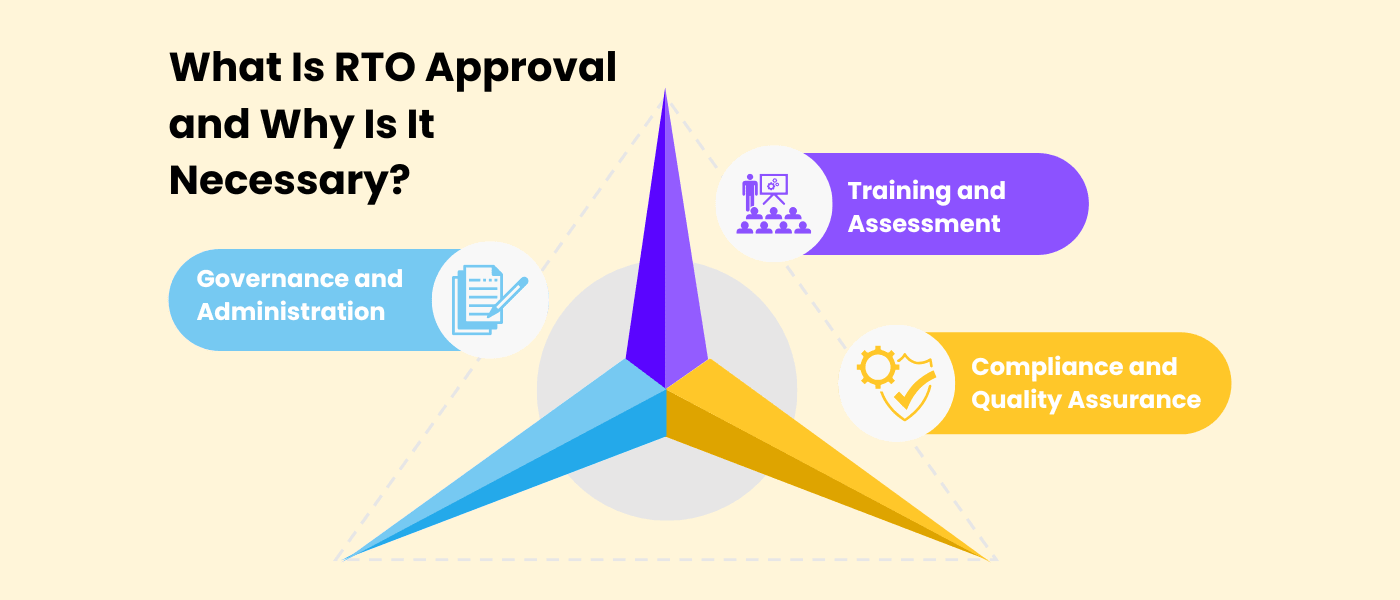
- Governance and Administration: Ensuring that the RTO has the appropriate organisational structure, policies, and procedures in place to operate effectively.
- Training and Assessment: Meeting the rigorous requirements for delivering training and assessment that is consistent, fair, and valid.
- Compliance and Quality Assurance: Adhering to regulatory requirements, including student enrolment, record keeping, and reporting.
The process of getting RTO approval can be complex, but it’s essential for any business or institution looking to provide accredited VET courses and qualifications. Without RTO approval, a provider cannot legally offer nationally recognised qualifications, and students may not be eligible for government funding, which can be a significant barrier to success.
The RTO Approval Process: An Overview
The RTO approval process is a multi-stage journey that begins with the submission of an application and ends with the final approval granted by ASQA. Below is an overview of the key steps involved:

Application Submission
The first step is to submit your application to ASQA, which includes detailed documentation that demonstrates your organisation’s capacity to meet the Standards for RTOs 2025.
ASQA’s Review of the Application
Once submitted, ASQA will conduct a thorough review of the documentation to assess whether the organisation complies with the necessary standards. They may request additional information or clarification, which can delay the approval process.

The Audit
If ASQA is satisfied with the application review, they will conduct an audit. This is a more in-depth examination, where ASQA auditors visit the applicant’s premises to assess the organisation’s operations, resources, and processes to verify that they meet compliance requirements.
Final Approval
After the audit, ASQA will provide feedback, and if your organisation passes, you will receive RTO approval. If minor issues are found, ASQA will provide guidance on necessary improvements before granting final approval.


How Long Does RTO Approval Take?
The timeline for RTO approval can vary depending on several factors, but on average, the entire process takes anywhere from 3 to 6 months. The length of time is affected by the complexity of the application, the completeness of the submission, the preparedness of the organisation for the audit, and ASQA’s current workload.
The process can be broken down into the following stages:
- Initial Application (1 to 2 months): This is when you submit your initial application to ASQA, including all required documents and evidence. A complete and well-organised application can help speed up this phase.
- ASQA Review (1 to 2 months): After submission, ASQA reviews your application and may ask for further information or clarification. If your application is clear and meets ASQA’s expectations, this phase may be quicker.
- Audit (1 to 2 months): Once your application is reviewed, ASQA will schedule an audit. The audit can take several weeks, depending on how quickly your organisation can respond to audit requests. The time taken for auditors to conduct their review and report their findings also factors into this phase.
- Final Approval (1 month): Once the audit is completed and any necessary changes are made, ASQA will issue the final approval. If your organisation is fully compliant, the approval can be granted swiftly.
Factors That Impact the RTO Approval Timeline
While the average timeline for RTO approval is 3 to 6 months, several factors can influence how long the process takes. These include:
Completeness of Your Application:
ASQA requires that all applications include comprehensive and accurate information. Missing documents or unclear submissions can significantly delay the process. For instance, missing policies and procedures or incorrect documentation may cause ASQA to return the application for revisions.
Your Organisation’s Preparedness for Audit:
An RTO audit is a detailed assessment of your operations, policies, and processes. If your organisation is not adequately prepared for the audit, this can result in delays. Ensuring that your staff is fully trained and that your resources (like assessment kits, learning materials, and training records) are in place can streamline the audit process.
Complexity of Your Application:
For example, if your RTO intends to offer a wide range of qualifications or if you’re applying for CRICOS registration (for international students), the approval process can take longer. More complex applications may require additional documentation or a more extensive audit process.
Compliance with ASQA’s Standards:
ASQA will not approve an RTO if it doesn’t meet the necessary compliance requirements. If your organisation fails to meet any of the standards outlined in the Standards for RTOs 2015, the approval process will take longer. You may need to make adjustments to your policies, systems, or processes before being granted approval.
ASQA’s Workload:
ASQA’s workload can also impact the timeline. During peak periods or when ASQA is processing a large number of applications, it may take longer for your application to be reviewed.
Steps to Achieve RTO Approval
- Prepare Your Documents:
Before submitting your application, ensure that you have all the required documents prepared and organised. This includes:
-
- A comprehensive business plan outlining your goals, operations, and financials.
- Policies and procedures for operations, assessment, and compliance.
- Evidence of staff qualifications and training strategies.
- Proof of your training resources, such as learning and assessment materials.
- Submit Your Application:
Submit your application to ASQA, including all supporting documentation. Be sure to double-check that everything is complete before submission to avoid delays. If you’re applying for CRICOS registration, make sure to include the additional requirements for international students. - Prepare for the Audit:
Once ASQA accepts your application, they will schedule an audit. Make sure your operations are fully compliant and that your staff understands the policies and procedures in place. Conduct internal audits to ensure that all processes are functioning correctly before ASQA’s auditors arrive. - Pass the Audit and Receive Final Approval:
If your organisation passes the audit, ASQA will issue your RTO approval. This typically occurs within a month of the audit if there are no issues or minor adjustments required.
Common Pitfalls and How to Avoid Them
- Incomplete Documentation:
A common reason for delays is missing or incomplete documentation. Always ensure that your application is thorough and includes all the necessary evidence of compliance. - Failing the Audit:
If your organisation fails the audit, ASQA may require you to make adjustments before granting final approval. Prepare your staff and operations for the audit by reviewing ASQA’s standards thoroughly. - Delayed Response to ASQA’s Requests:
ASQA may request additional information or clarification. Ensure that your organisation responds promptly to avoid delays in the approval process. - Lack of Compliance with ASQA’s Standards:
If your organisation does not meet ASQA’s standards, the approval process can take much longer. Conduct regular internal reviews of your policies, processes, and staff qualifications to ensure you’re always audit-ready.

How to Prepare for Your ASQA Audit
Preparation for an ASQA audit is a critical step in the RTO approval process. Here’s how you can make sure your organisation is ready:

Train Your Staff
Ensure that your staff understands ASQA’s standards and their responsibilities in maintaining compliance.

Review Your Policies and Procedures
Make sure your policies, including those for assessment, student enrolment, and complaint handling, align with ASQA’s requirements.

Organise Your Resources
Make sure that your training resources, including learning materials, assessments, and evidence of student achievements, are organised and accessible for the auditors.

Conduct Internal Audits
Regularly conduct internal audits to check that all aspects of your operations are in compliance with ASQA standards.
FAQs About RTO Approval
The key to speeding up the approval process is submitting a complete, clear, and well-organised application. Also, ensure your organisation is fully prepared for the audit.
Yes, CRICOS registration requires additional compliance with ASQA’s standards, particularly in relation to supporting international students. This may lengthen the approval timeline.
If your application is rejected, ASQA will provide you with feedback and guidance on the areas that need improvement. You can reapply after addressing any issues.
The cost of applying for RTO registration varies depending on the application type and additional services (like CRICOS). Visit ASQA’s website for up-to-date fee schedules.
Yes! VET Resources offers compliance kits and learning materials tailored to ASQA standards, which can help you ensure your application meets all necessary requirements.
Stay ahead of ASQA compliance in the VET sector — request your free resource sample today to ensure your RTO meets all necessary standards for approval.