

Key Objectives and Strategic Goals of ASQA
ASQA’s Corporate Plan for 2025–26 introduces a clear vision for improving VET quality and compliance. The plan consolidates ASQA’s five previous strategic objectives into three core priorities:
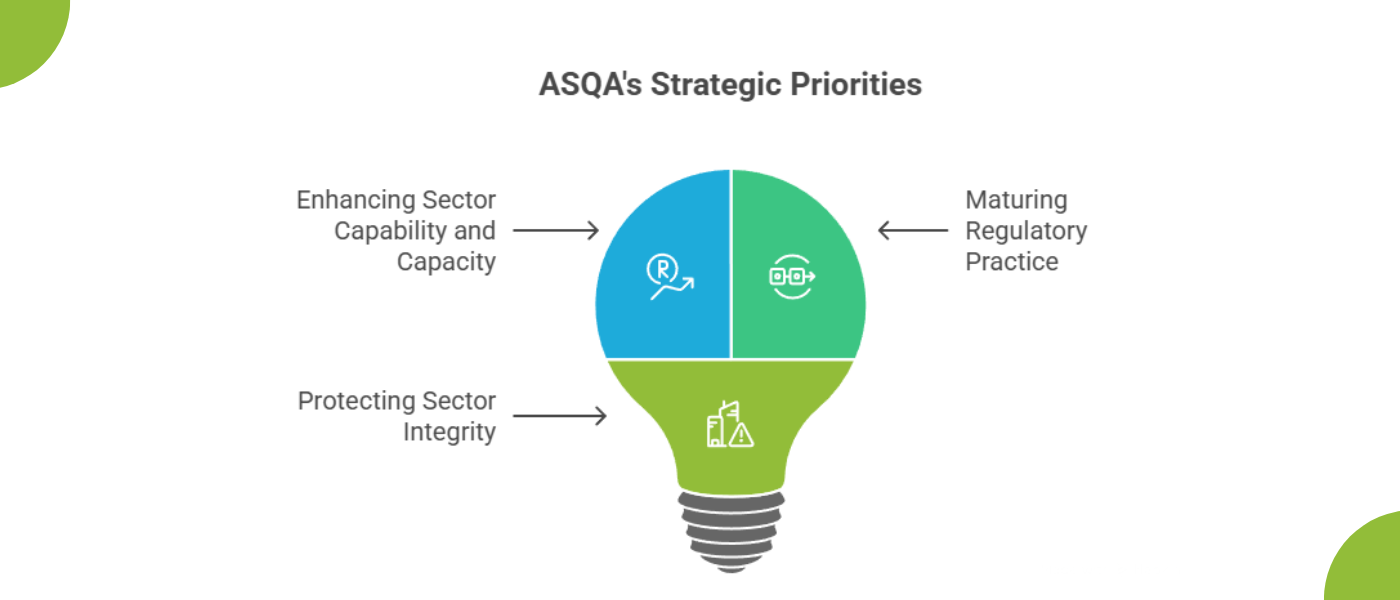
- Enhancing Sector Capability and Capacity
ASQA is focused on supporting RTOs as they transition to the new Standards for RTOs 2025. This involves providing resources, training, and guidance to ensure that RTOs can meet the revised expectations. Providers will need to invest in upskilling their staff, refining their assessment strategies, and adopting new delivery methods to maintain compliance. - Maturing Regulatory Practice
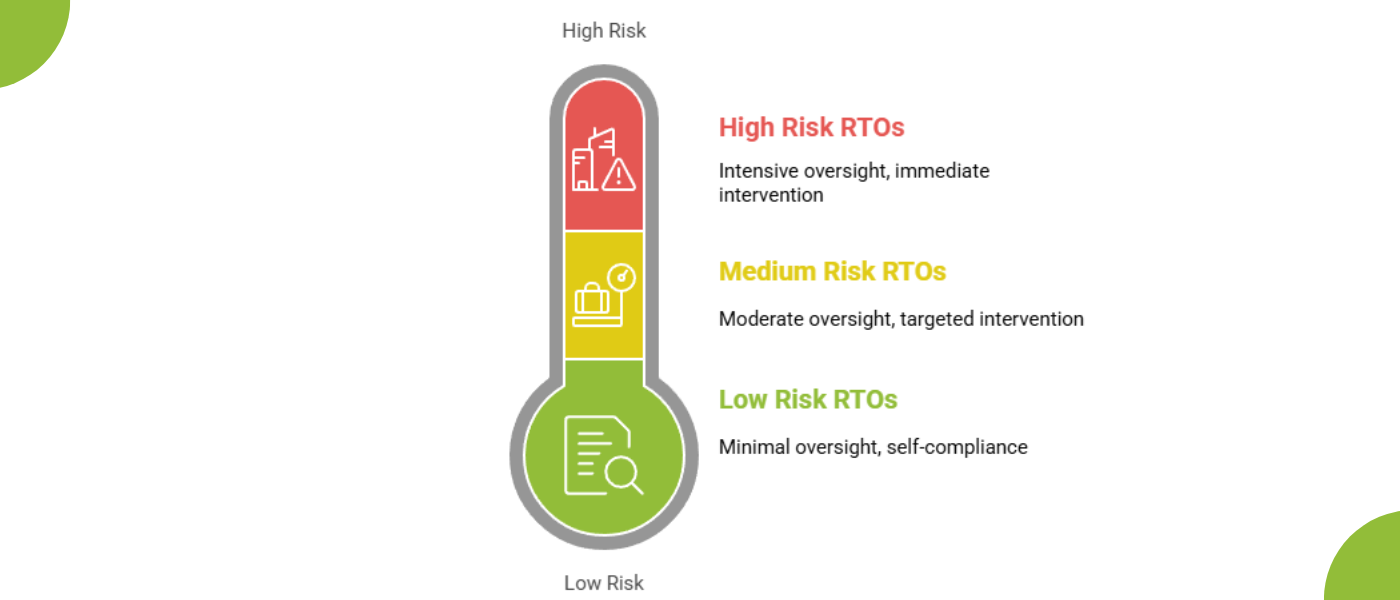
The plan signals a shift towards a more nuanced regulatory framework. ASQA intends to adopt a risk-based approach that tailors oversight and intervention based on the risk profiles of individual RTOs. High-risk providers will undergo more stringent checks, while low-risk RTOs will experience lighter regulatory oversight. This strategy aims to streamline compliance processes and reduce unnecessary burdens on well-performing RTOs. - Protecting Sector Integrity
ASQA will continue its aggressive stance against non-genuine providers, bad-faith operators, and other entities that undermine the sector’s integrity. The plan outlines ASQA’s efforts to strengthen its intelligence-gathering capabilities and collaborate with other regulators and agencies to identify and act against non-compliant organisations quickly.
Risk-Based Regulatory Approach: A Shift in Oversight
One of the most important shifts in ASQA’s Corporate Plan is its adoption of a risk-based regulatory approach. This model is designed to ensure that ASQA’s regulatory practices are more responsive and efficient. The new approach means that RTOs will not be subject to uniform oversight; instead, the level of scrutiny will depend on their performance, history of compliance, and risk factors.
For example, an RTO that has consistently met compliance standards and demonstrated strong governance may undergo fewer audits or checks. In contrast, an RTO that has struggled with compliance or received complaints may face more frequent inspections and more rigorous regulatory actions. This change aims to allow ASQA to focus its resources where they are needed most, creating a more efficient regulatory environment for both ASQA and RTOs.
Transitioning to the 2025 Standards for RTOs
The 2025 Standards for RTOs are set to become the new benchmark for quality training and assessment practices in the VET sector. These standards will replace the current set of Standards for RTOs, and all RTOs must ensure they are compliant with the new regulations by 1 July 2025.
The transition will require RTOs to make significant adjustments to their operations. These adjustments include:
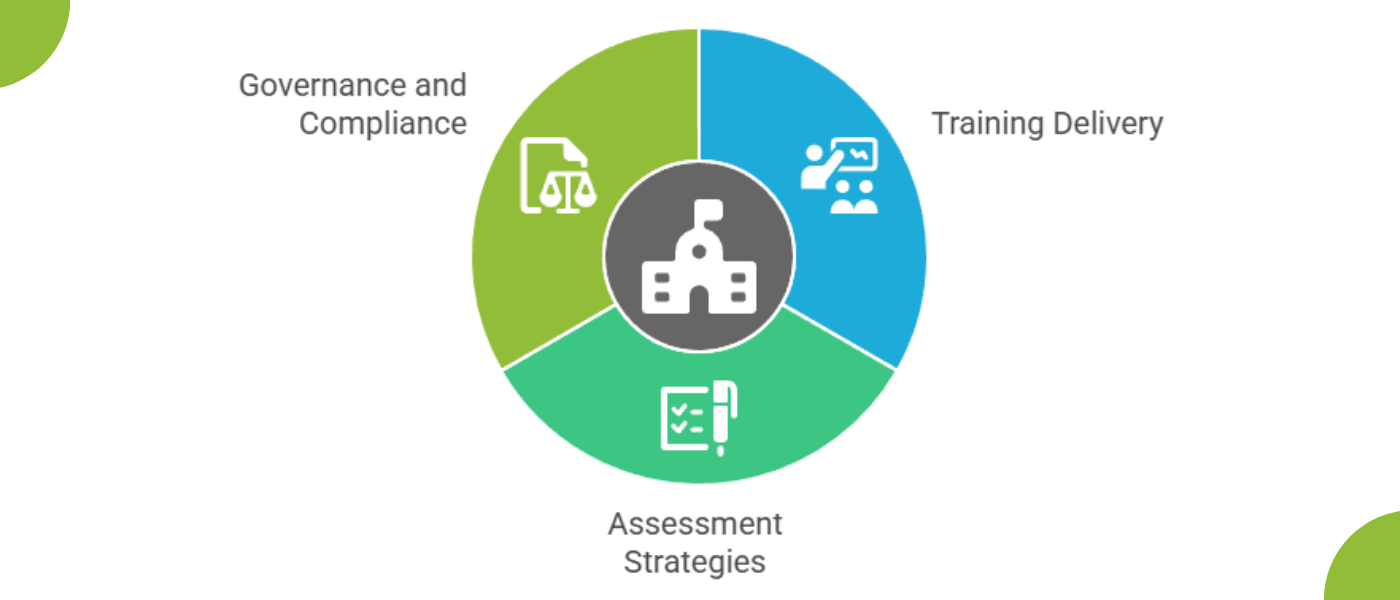
- Training Delivery: RTOs must ensure that their training programs are outcome-focused, addressing current and future skill needs in the workforce. This might involve updating training materials, introducing new delivery methods, or adjusting assessment strategies.
- Assessment Strategies: RTOs must review and refine their assessment strategies to meet the new standards, which focus on ensuring learners’ skills are practical, transferable, and aligned with industry needs.
- Governance and Compliance: Stronger emphasis will be placed on RTO governance and internal processes. RTOs will need to demonstrate that they have robust systems for managing quality assurance and continuous improvement.
ASQA’s Key Initiatives: What RTOs Need to Know
ASQA’s Corporate Plan includes several key initiatives designed to improve the overall integrity of the VET sector. These initiatives will directly impact RTOs and shape the future regulatory landscape. Key initiatives include:

- Enhanced Sector Collaboration:
ASQA aims to strengthen its collaboration with stakeholders, including other regulatory bodies, industry associations, and RTOs themselves. This collaboration will help align regulatory strategies and ensure that ASQA’s actions are informed by the needs and challenges of the VET sector. - Improved Intelligence and Data Analysis:
ASQA will invest in improving its data analysis capabilities to better identify risk factors and target regulatory actions. By leveraging advanced technology and data analytics, ASQA will be able to proactively identify non-compliant providers and prevent potential issues before they escalate. - Digital Transformation:
In line with the Australian Government’s broader commitment to digital transformation, ASQA will invest in digital systems and tools to streamline regulatory processes. This will include the adoption of new technologies for compliance tracking, reporting, and engagement with RTOs. - Protecting Sector Integrity:
ASQA remains committed to rooting out non-genuine providers who exploit the VET system. This includes closer monitoring of recruitment and marketing practices, as well as stronger enforcement actions for non-compliant RTOs.
What It Means for RTOs: Compliance & Operational Adjustments
RTOs must proactively adapt their operations to meet the requirements outlined in ASQA’s Corporate Plan. Some of the key compliance and operational adjustments that RTOs will need to make include:
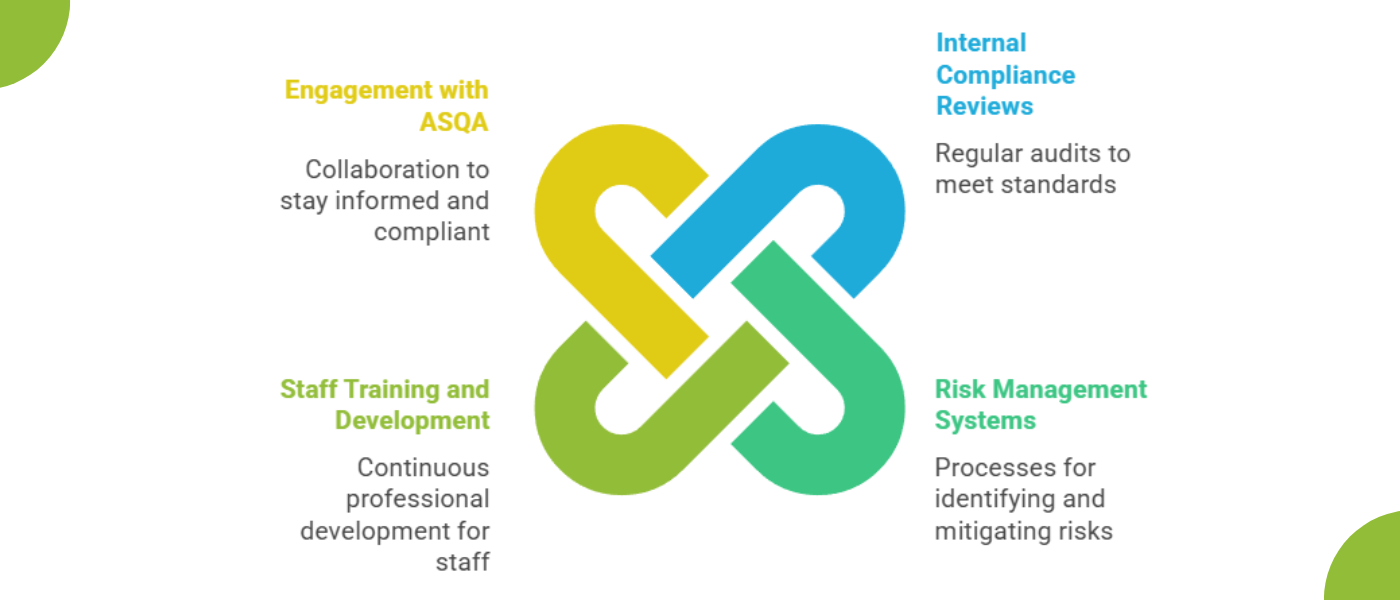
- Internal Compliance Reviews:
RTOs should regularly conduct internal audits to ensure they meet the revised Standards for RTOs 2025. This includes reviewing training programs, assessment strategies, and governance practices. - Risk Management Systems:
RTOs must develop and maintain robust risk management systems. This includes having clear processes for identifying, managing, and mitigating risks to compliance, such as issues related to training delivery, assessment, and student outcomes. - Staff Training and Development:
To remain compliant with the new standards, RTO staff will need to undergo continuous professional development. This may include training on new compliance requirements, as well as updates on best practices for delivering quality VET programs. - Engagement with ASQA:
RTOs are encouraged to engage with ASQA through consultations, feedback mechanisms, and other collaboration opportunities. By staying informed and involved in ASQA’s initiatives, RTOs can ensure they remain ahead of regulatory changes and maintain a strong compliance record.
FAQs
The ASQA Corporate Plan 2025–26 outlines the strategic priorities for ASQA in the coming years, focusing on improving regulatory practices, enhancing sector collaboration, and ensuring the quality of VET delivery. It is crucial for RTOs to understand these priorities to stay compliant with regulatory changes.
The changes will introduce more stringent oversight for high-risk providers and offer lighter touch regulation for low-risk RTOs. Providers will need to adapt their training, assessment, and governance practices to meet the new Standards for RTOs 2025.
RTOs should review the 2025 Standards, assess their current compliance systems, and make necessary adjustments to ensure they meet the new requirements. Regular internal audits and staff training are essential steps for ongoing compliance.
Yes, VET Resources provides free samples of LLND and RPL kits to help RTOs adapt to the new compliance requirements and improve their training delivery and assessment strategies.
Yes, VET Resources offers a range of VET resources, including LLND, RPL, and Learning & Assessment Kits, all designed to meet the latest ASQA compliance standards.